Boswell wrote his account of his last meeting with David Hume (Longman p. 2954 - 2957) not for publication, but for himself--and possibly for posterity. He included it in his journal and added some changes and a postscript upon rereading it later, but showed it to few people (if anyone).
Reading and interpreting a private document like this one involves different questions than reading a text (like his account of his conversations with Johnson or Johnson's Vanity of Human Wishes) that was deliberately written for circulation to a wide audience.
What strikes you as worthy of comment, unusual, or significant in this account? What kinds of matters does Boswell seem to focus on, and what seems particularly important to him? What does this text tell you about Boswell's faith?
Respond with your interpretive reflections on this reading, supported and illustrated by a relevant quotation from it.
Deadline: Friday (10/2), start of class.
Wednesday, September 30, 2009

For Credit: Johnson on Hume
On p. 2964-2965 of the Longman anthology, Boswell records Johnson's account of his reasons for disagreeing with Hume's account of miracles.
Is Johnson's refutation of Hume valid? Why or why not? Cite text (Hume or Johnson) to support your claims.
Deadline: Friday (10/2), start of class.
Is Johnson's refutation of Hume valid? Why or why not? Cite text (Hume or Johnson) to support your claims.
Deadline: Friday (10/2), start of class.
Tuesday, September 29, 2009

Sunday, September 27, 2009
For Credit: The Spacious Firmament
As an "Ode" or lyric poem, Addison's poem ("The spacious firmament on high") doesn't try to tell a story or make an argument in the way that Absalom and Achitophel or The Vanity of Human Wishes do, but it does advance certain claims about the divine. Comment on this post with your observations about those claims. Where do you locate Addison's views on God in this poem? Which of the lines/images/turns of phrase best express them? Do you perceive any problems with the views poem advances?
Deadline: Wednesday (9/30), start of class.
Deadline: Wednesday (9/30), start of class.
For Credit: Newton!
.jpg)
In the excerpt from Newton in the Longman anthology, he responds to four queries from his correspondent. We don't have the text of the queries, but we do have Newton's four answers. Respond to this post by choosing ONE of his answers and explaining what his main idea is--and point to some text that helps to spell it out. You can also answer by suggesting (with kind collegiality, as always) a more accurate explanation of Newton's thinking than a classmate has offered.
Deadline: Wednesday (9/30), start of class.
Friday, September 25, 2009
No Class Monday; Extra Office Hours Tuesday
I just want to remind everyone that, as the syllabus says, we will not be having class on Monday because of Yom Kippur. Your next reading assignment is for class on Wednesday and can be found in the syllabus.
I will be holding extra office hours on Tuesday (9/29) from 1:30 to 2:30. If you did not get your paper back in class on Friday, you can pick it up then. If you wish to revise your paper, revisions will be due in class on Friday (10/2), and you must hand in your original marked-up paper along with the revision.
Good Yom Tov!
I will be holding extra office hours on Tuesday (9/29) from 1:30 to 2:30. If you did not get your paper back in class on Friday, you can pick it up then. If you wish to revise your paper, revisions will be due in class on Friday (10/2), and you must hand in your original marked-up paper along with the revision.
Good Yom Tov!
For Credit: The Pleasures of the Poem (last chance to post for Week 5)
"His fall was destined to a barren strand,
A petty fortress, and a dubious hand;
He left the name, at which the world grew pale,
To paint a moral, or adorn a tale."
(Vanity of Human Wishes, l. 219 - 222)
T. S. Eliot thought that those lines constitute one of the best passages in all of restoration and eighteenth-century verse. I particularly like the way that the reader gets to participate in the fall that Johnson describes: we are reading the "tale" that Charles XII "adorns" and gleaning the moral that Johnson extracts from his biography.
My question in class earlier this week about the poetic qualities of this poem fell pretty flat, but now that we've spent more time working through Johnson's verse, I'd like to pose it again, in a slightly different way.
What are the pleasures of this text? Johnson is one of the eighteenth-century masters of the heroic couplet, although his use of the form differs from Dryden's. Identify a couplet or two that seem to you particularly effective or powerful, and describe what it is about them that impresses you.
Deadline: Saturday (9/26), midnight.
A petty fortress, and a dubious hand;
He left the name, at which the world grew pale,
To paint a moral, or adorn a tale."
(Vanity of Human Wishes, l. 219 - 222)
T. S. Eliot thought that those lines constitute one of the best passages in all of restoration and eighteenth-century verse. I particularly like the way that the reader gets to participate in the fall that Johnson describes: we are reading the "tale" that Charles XII "adorns" and gleaning the moral that Johnson extracts from his biography.
My question in class earlier this week about the poetic qualities of this poem fell pretty flat, but now that we've spent more time working through Johnson's verse, I'd like to pose it again, in a slightly different way.
What are the pleasures of this text? Johnson is one of the eighteenth-century masters of the heroic couplet, although his use of the form differs from Dryden's. Identify a couplet or two that seem to you particularly effective or powerful, and describe what it is about them that impresses you.
Deadline: Saturday (9/26), midnight.
Thursday, September 24, 2009
For Credit: Johnson's God?
A number of people by now have pointed out, on the blog or in class discussion, that God is Johnson's answer to the vanity of human wishes. Even though every desire one might have (even the most normal and benign expressions of one's basic humanity, like wishing to have a long life) can end in misery and futility, the final verse paragraph of the poem some consolation in the form of religious belief.
Try to specify here the precise nature of that belief. How does Johnson define God? What does he see as humankind's relationship to that divine being? What can and can't God do to ease the inevitable woe of human existence? Your classmates have already offered a few provisional definitions in their responses to other questions on the blog--these might help you get started (no, they're not all saying the same thing):
Cite some text to support your response.
Deadline: start of class Friday (9/25).
Try to specify here the precise nature of that belief. How does Johnson define God? What does he see as humankind's relationship to that divine being? What can and can't God do to ease the inevitable woe of human existence? Your classmates have already offered a few provisional definitions in their responses to other questions on the blog--these might help you get started (no, they're not all saying the same thing):
He seems as though having faith in God is all that people need to have faith in if they seek goodness and want their faith rewarded. All else is a wasted of time and effort.
The acceptance of an almighty God will occasion the decline of excessive ambition and self-worship, leading to "a healthful mind," "obedient passions," and "a will resigned" (359-60). This is the only way to find happiness in life independent of the follies and flaws of others.
I think that Johnson says man really has no other hope but to turn to some sort of Creator to figure things out for him.
Cite some text to support your response.
Deadline: start of class Friday (9/25).
Wednesday, September 23, 2009
For Credit: Reason?
A version of this question was written on the board as one of the "goals" for discussion, but we never quite got there, so I'll raise the issue again here:
"Reason" is a term we tend to associate with the Enlightenment; it's also a term that comes up a lot in class discussion.
The word "reason" appears a few times in Samuel Johnson's The Vanity of Human Wishes. Just how useful is it as an organizing concept for explaining this poem? Is a concern with "reason" central to this poem, or is it a side issue?
Cite some evidence to support your claims.
Deadline: Friday (9/25), start of class.
"Reason" is a term we tend to associate with the Enlightenment; it's also a term that comes up a lot in class discussion.
The word "reason" appears a few times in Samuel Johnson's The Vanity of Human Wishes. Just how useful is it as an organizing concept for explaining this poem? Is a concern with "reason" central to this poem, or is it a side issue?
Cite some evidence to support your claims.
Deadline: Friday (9/25), start of class.
Monday, September 21, 2009
For Credit: Patronage and Preferment
Why do you think Johnson makes it a point to include different, specific identities in the following lines? Is there an echoing theme between the identities? What do these names add to your interpretation of the text?
“Love ends with hope, the sinking statesman’s door/ Pours in the morning worshiper no more;/ For growing names the weekly scribbler lies,/To growing wealth the dedicator flies,” (lines 79-82)
“Love ends with hope, the sinking statesman’s door/ Pours in the morning worshiper no more;/ For growing names the weekly scribbler lies,/To growing wealth the dedicator flies,” (lines 79-82)
For Credit: What Your Classmates Want to Know
Below are some questions that your classmates asked about Samuel Johnson's Vanity of Human Wishes in the writing exercises from today's discussion. Look them over; if you have thoughts about a possible answer (supported of course with evidence from the poem) offer it here--just be sure to specify which question you're answering. (Please note: I have modified the wording of a few of these questions for clarity.)
Deadline: Wednesday (9/23), start of class.
1. Does Johnson feel that there was a time when men's virtues were not subject to unavoidable vice?
2. Is Johnson actually offering an "out" to all the bad that may befall you?
3. In Johnson's view, could reason, if used in excess, be as harmful as qualities like courage and eloquence?
4. There really seems to be no salvation for mankind and their desires. What are readers supposed to learn from this and what are they supposed to do to fix their inherent plight?
5. Would C18 readers get more out of this poem, relate to it more than modern readers, or is it a text for all time?
6. In Johnson's view, can one man be reasonable and succeed, or will the rest of mankind ultimately bring him down?
Deadline: Wednesday (9/23), start of class.
Friday, September 18, 2009
Paraphrasing "The Vanity of Human Wishes" (UPDATED!)

UPDATE: I'm extending the deadline for paraphrasing portions of the poem that we did not discuss in class on Monday. If you have not already attempted a paraphrase, please feel free to do so.
Between now and the start of class on Monday (9/21) you can get blog credit for attempting a paraphrase of 6 to 10 lines of Samuel Johnson's poem.
As explained in an earlier blog posting on Absalom and Achitophel: to paraphrase something is to restate it in your own words. You should strive to retain as much of the meaning as possible while "translating" it directly into C21 language that is clear, comfortable, and accessible. Don't try to rhyme--you don't even need to preserve Johnson's line breaks or retain his sentence structure! It's fine to write your paraphrase in as many or as few prose sentences as can capture Johnson's meaning most clearly.
Try to select a chunk that works as a coherent and more-or-less self-contained unit. Note that, like Absalom and Achitophel, The Vanity of Human Wishes is written as a series of really really long sentences, indicated by capital letters and periods. You'll probably find it easier to figure out what Johnson is saying if you take on a passage that does not begin or end mid-sentence. So that your paraphrases can function as a resource for your classmates, you should post your paraphrase as a response to the post below indicating the particular part of the poem you're working with.
For Credit: Lines 1 - 20 (Stating the Problem)
If you want to paraphrase 6 - 10 lines from the section of poem in which Johnson introduces the poem and states the problem he will address, post your paraphrase as a comment here.
Deadline: Monday (9/21), start of class.
Deadline: Monday (9/21), start of class.
For Credit: Lines 21 - 48 (Wealth)
If you want to paraphrase 6 to 10 lines from the section of poem in which Johnson discusses wealth, post your paraphrase as a comment here.
Deadline: Monday (9/21), start of class.
Deadline: Monday (9/21), start of class.
For Credit: Lines 73 - 98 (Patronage and Preferment)
If you want to paraphrase 6 to 10 lines from the section of poem in which Johnson discusses patronage and perferment, post your paraphrase as a comment here.
Deadline:Monday (9/21) Wednesday (9/23), start of class.
Deadline:
For Credit: Lines 49 - 72 (Laughter and Social Critique)
If you want to paraphrase 6 to 10 lines from the section of poem in which Johnson discusses laughter (and social critique), post your paraphrase as a comment here.
Deadline:Monday (9/21) Wednesday (9/23), start of class.
Deadline:
For Credit: Lines 135 - 174 (Intellectual Preeminence)
If you want to paraphrase 6 to 10 lines from the section of poem in which Johnson discusses intellectual preeminence (note particularly lines 143 – 156, a sonnet-within-the-poem on the many dangers and obstacles that can befall the young college student…), post your paraphrase as a comment here.
Deadline:Monday (9/21) Wednesday (9/23), start of class.
Deadline:
For Credit: Lines 99 - 134 (Political Power)
If you want to paraphrase 6 to 10 lines from the section of poem in which Johnson discusses political power, post your paraphrase as a comment here.
Deadline:Monday (9/21) Wednesday (9/23), start of class.
Deadline:
For Credit: Lines 175 - 254 (Military Might)
If you want to paraphrase 6 to 10 lines from the section of poem in which Johnson discusses military might, post your paraphrase as a comment here.
Deadline:Monday (9/21) Wednesday (9/23), start of class.
Deadline:
For Credit: Lines 255 - 318 (Long Life)
If you want to paraphrase 6 - 10 lines from the section of poem in which Johnson discusses long life, post your paraphrase as a comment here.
Deadline:Monday (9/21) Wednesday (9/23), start of class.
Deadline:
For Credit: Lines 319 - 342 (Beauty)
If you want to paraphrase 6 to 10 lines from the section of poem in which Johnson discusses beauty, post your paraphrase as a comment here.
Deadline:Monday (9/21) Wednesday (9/23), start of class.
Deadline:
Wednesday, September 16, 2009
For Credit: Lines 343 - 368 (Conclusion and Consolation)
If you want to paraphrase 6 to 10 lines from the conclusion of the poem, post your paraphrase as a comment here.
Deadline:Monday (9/21) Wednesday (9/23), start of class.
Deadline:
placeholder for lost post
A blog post asking for reflections on the process of writing the first assignment somehow disappeared when I put up the posts for the Johnson paraphrase. The responses remained though, attached to the last Johnson paraphrase post. I've cut and pasted those comments here so that I can delete them from the post they don't belong to.
For Credit: Write Your Own Heroic Couplets! (updated, with new deadline--LAST CHANCE TO POST FOR WEEK 4!)
UPDATE:
When I initially posted this method of getting blog points, there were some gorgeous responses, but a couple of them lost points for not quite adhering to this form. We're going to be reading another poem next week that is written in heroic couplets (Samuel Johnson's Vanity of Human Wishes, so I'd encourage you to have another go at writing them (particularly if you didn't give it a shot the first time this post appeared). Just be sure to count those syllables and make sure your lines rhyme!
THE ORIGINAL POST
Dryden, Alexander Pope, Samuel Johnson, and pretty much every significant eighteenth-century poet wrote poems in the form of heroic couplets.
Heroic couplets consist of ten syllables per line (preferably iambic pentameter, but rhythmic meter is not essential), rhymed aa bb. If you need an example, look at Absalom and Achitophel or our upcoming poem, The Vanity of Human Wishes
.
You can respond to this post by writing 3 - 4 heroic couplets (that is, 6 - 10 lines of verse) as follows:
A. Your verses do not need to stand alone as an entire poem -- feel free to write as if they are an excerpt from a larger work.
B. Your subject must be ONE (1) of the following things: (1) health care reform, (2) an entertainment celebrity of your choosing, (3) the landscape of Champaign-Urbana.
C. You must write as if your verses, with your real name attached, will be posted on your Facebook profile, taped up in the elevator of your dorm or apartment building, printed in the Daily Illini and your hometown newspaper, and distributed as a handout in class (no, all these things will not happen—but that’s the degree of publicity you should imagine).
D. Your verses should NOT be funny (wry wit is another matter...). We are familiar with rhymed verse written to comic ends; rhyming for other purposes does not sit quite as easily—that’s why I’m asking you to do it.
New deadline: midnight Saturday (9/19).
When I initially posted this method of getting blog points, there were some gorgeous responses, but a couple of them lost points for not quite adhering to this form. We're going to be reading another poem next week that is written in heroic couplets (Samuel Johnson's Vanity of Human Wishes, so I'd encourage you to have another go at writing them (particularly if you didn't give it a shot the first time this post appeared). Just be sure to count those syllables and make sure your lines rhyme!
THE ORIGINAL POST
Dryden, Alexander Pope, Samuel Johnson, and pretty much every significant eighteenth-century poet wrote poems in the form of heroic couplets.
Heroic couplets consist of ten syllables per line (preferably iambic pentameter, but rhythmic meter is not essential), rhymed aa bb. If you need an example, look at Absalom and Achitophel or our upcoming poem, The Vanity of Human Wishes
.
You can respond to this post by writing 3 - 4 heroic couplets (that is, 6 - 10 lines of verse) as follows:
A. Your verses do not need to stand alone as an entire poem -- feel free to write as if they are an excerpt from a larger work.
B. Your subject must be ONE (1) of the following things: (1) health care reform, (2) an entertainment celebrity of your choosing, (3) the landscape of Champaign-Urbana.
C. You must write as if your verses, with your real name attached, will be posted on your Facebook profile, taped up in the elevator of your dorm or apartment building, printed in the Daily Illini and your hometown newspaper, and distributed as a handout in class (no, all these things will not happen—but that’s the degree of publicity you should imagine).
D. Your verses should NOT be funny (wry wit is another matter...). We are familiar with rhymed verse written to comic ends; rhyming for other purposes does not sit quite as easily—that’s why I’m asking you to do it.
New deadline: midnight Saturday (9/19).
For Credit: The Big Picture

We're coming to the end of the introductory portion of this course. We've listened to Pepys and Cavendish describe the Royal Society's doings, we've looked through the microscope with Hooke, and we've pondered the nature of ambergris with Boyle. We've seen Dryden defend the monarchy against a number of impending threats. We've watched Hester Thrale drum essential knowledge into her toddler's resistant head, and we've argued with Locke about education. We've gone on Diderot's mental journey to Tahiti and been intrigued by his suggestions that sexual enjoyment is a human good to be acknowledged, even celebrated. We've been titillated by Fantomina's adventures and wondered what this combination of fantasy and realism portended for the development of literature. In short, we've bounced from one end of the Enlightenment period to another, and we've touched on any number of key ideas and more than a few significant features.
What does it all add up to? What do you know now that you didn't know back when the semester started? What recurring themes do you see that might allow you to get beyond obvious claims ("reason was important during the enlightenment!") and arrive at some more nuanced understanding of the period? Identify one text from those we've read so far that seems particularly crucial for understanding this period, and use a brief quote from it to say why.
Deadline: Friday (9/18), start of class.
Monday, September 14, 2009
For Credit: Critiquing Progress

In what ways do Rousseau's reflections on progress seem consistent with other readings thus far in the course? In what ways does he seem to depart from the other seventeenth- and eighteenth-century writers we've been talking about?
Cite evidence from the texts to support your claims. As always, you are welcome to take issue with someone else's point, so long as you do so kindly and collegially.
Deadline: Wednesday (9/16), start of class.
For Credit: History as a Guide...to What?
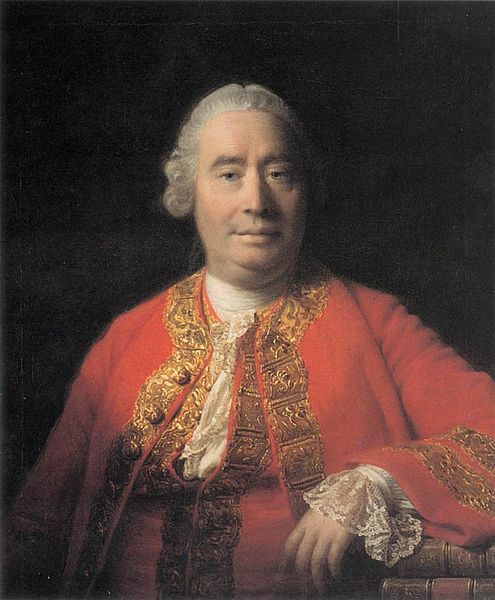
In the reading for Wednesday, Hume compares the data of history ("wars, intrigues, factions, and revolution") with the "collections of experiments" through which "the natural philosopher [i.e., scientist] becomes acquainted with the nature of plants, minerals, and other external objects."
Hume's analogy between the study of history and the study of the natural world depends on several assumptions (which he spells out) about why it's useful to study history.
Identify one or more of those assumptions, then consider it critically. Is Hume's understanding of why history is valuable consistent with why people think history is worth studying now? Is Hume's view of history a product of his time, or is it one of those "constant and universal principles of human nature" that Hume believes characterize people regardless of when or where they live?
Support your claims with some relevant text and be kind and collegial in disagreeing one another.
Deadline: start of class on Wednesday (9/16).
Sunday, September 13, 2009
First Assignment Grading Guidelines
Click here for a handout that explains how I'll be scoring the assignments you'll be handing in on Friday. I'm also putting in the sidebar so you can find it easily. Please feel free to e-mail me, come to office hours, or ask in class if you have questions about the assignment.
Saturday, September 12, 2009
Group Discussion 2: Locke and Education
Locke's noteworthy essay, "Some Thoughts Concerning Education," was widely read in 1693 and continued to serve as an influential piece in Protestant America, where it became a principle guide on how to breed children. In what ways does this essay provide insight into the 18th century education system? In what ways are these teachings still relevant today?
Friday, September 11, 2009
For Credit: Did Piozzi Read Locke?
Does Piozzi's account of her daughter's progress seem consistent with the principles of education advanced by John Locke? To what extent does Piozzi seem to take a different approach to raising her daughter? What in these texts suggests to you that Piozzi was or was not familiar with Locke's approach to education? As always, cite some text to support your claims.
Deadline: Monday (9/14), start of class.
Deadline: Monday (9/14), start of class.
For Credit: What Did You Learn this Week? (last chance to post for Week 3)
Identify a sentence or two from the reading for this week that impressed you in some way and explain why.
Deadline: Saturday (9/12), midnight.
Deadline: Saturday (9/12), midnight.
Thursday, September 10, 2009
Information about Writing Papers and Questions about the Upcoming Assignment
The prompt for the first writing assignment refers you to the syllabus for information about late papers and the like...but I managed to leave that information off the syllabus when I was preparing it. So here's what you need to know:
If you have any questions about the assignment, please feel free to post them here. You can of course ask me by e-mail, after class, or in office hours, but chances are your classmates may have similar uncertainties, and asking here makes the answer available to everyone.
Getting Help: Please feel free to come talk to me about writing assignments, particularly if you are unclear about the paper topic or my expectations. If you consult the Writers’ Workshop (www.english.uiuc.edu/cws/wworkshop), it is a good idea to confirm their advice with me, as the workshop staff is not as familiar with the course material and my requirements as I am.
Submitting Papers: Do not submit assignments electronically unless they are late or you have made prior arrangements with me.
Late Papers: If you foresee a difficulty with a due date, please see me in advance to work out an alternative arrangement. If you do not make prior arrangements, late assignments will be docked 1/3 of a letter grade for every day late (for example, a B will become a B- if the paper is handed in the day after it is due). Late papers should be submitted electronically.
If you have any questions about the assignment, please feel free to post them here. You can of course ask me by e-mail, after class, or in office hours, but chances are your classmates may have similar uncertainties, and asking here makes the answer available to everyone.
Wednesday, September 9, 2009
For Credit: Tahiti!

How are the texts by Diderot that we're reading for Friday consistent--or not--with some any of the other particular readings we've encountered thus far? Respond to this post by identifying one point of similarity between this and one other reading.
The usual rules apply: be respectful of one another's opinions and always, always, always, back up your claims with directly quoted evidence from the texts.
Deadline for this post and the one below: Friday (9/11), start of class.
Tuesday, September 8, 2009
Group Discussion 1: Enjoyment and Tahiti
On a somewhat related note, what is the significance of Diderot's choice to position his story in the context of a foreign and relatively unknown land? How does this influence the reader's understanding of his argument?
Friday, September 4, 2009
For Credit: Royal Society Grab Bag
To help clarify some of the main ideas in the readings for Wednesday (for yourself and for the benefit of your classmates) pick any one of the questions below and answer it by commenting on this post. Just be clear about which question you're answering. If you disagree with an answer that has already been posted, or think you have a better one, feel free to offer it--just take care to be constructive and collegial in doing so.
As always, support your claims with direct quotation from the text.
1. What is Sprat's main objection to "eloquence"?
2. Why is "the general constitution of the minds of the English" a factor in the Royal Society's favor?
3. What are Boyle's reasons for believing the information he is offering about "Amber Greece" (ambergris) is accurate? Are those reasons justified in your opinion?
4. Does Hooke follow Sprat's recommendations about refraining from "eloquent" language? Does his prose style support or undermine Sprat's exhortations?
5. What does Hooke's writing convey that his images do not? Why does he need the proverbial "thousand words" in addition to his pictures?
6. What sentences (if any) are so difficult to understand as to be incomprehensible? What specifically seems to trip you up in the sentence?
Deadline: Wednesday (9/9), start of class.
As always, support your claims with direct quotation from the text.
1. What is Sprat's main objection to "eloquence"?
2. Why is "the general constitution of the minds of the English" a factor in the Royal Society's favor?
3. What are Boyle's reasons for believing the information he is offering about "Amber Greece" (ambergris) is accurate? Are those reasons justified in your opinion?
4. Does Hooke follow Sprat's recommendations about refraining from "eloquent" language? Does his prose style support or undermine Sprat's exhortations?
5. What does Hooke's writing convey that his images do not? Why does he need the proverbial "thousand words" in addition to his pictures?
6. What sentences (if any) are so difficult to understand as to be incomprehensible? What specifically seems to trip you up in the sentence?
Deadline: Wednesday (9/9), start of class.
For Credit: Pepys on the Royal Society
Samuel Pepys (pronounced "peeps") supplies you with an eye-witness account of what it was like to attend a meeting of the Royal Society. What further understanding do you gain from his description that you wouldn't have from reading the excerpts from the Royal Society's own Transactions? How does Pepys confirm, enrich or complicate your impression of C18 science?
Deadline: Wednesday (9/9), start of class.
Deadline: Wednesday (9/9), start of class.
For Credit: What's Cavendish's Problem?
It's not known for certain that Margaret Cavendish had Hooke's Micrographia in mind when she penned her "Observations upon Experimental Philosophy," but it seems entirely possible. Assuming she's writing about the Hooke excerpt included in your reading for today, try to pinpoint the source of her skepticism. Why does Cavendish think Hooke has got it wrong? Just how legitimate are her objections?
Deadline: Wednesday (9/9), start of class.
Deadline: Wednesday (9/9), start of class.
For Credit: Questions, Concerns, Bafflement? (Deadline extended; last chance to post for Week 2)
We've covered a lot of material very quickly this week. Post your remaining questions, curiosity, confusion, or puzzlement about Dryden's Absalom and Achitophel here!
Cite some text to illuminate your inquiry.
Deadline:Friday (9/4), start of class Saturday (9/5), midnight.
Cite some text to illuminate your inquiry.
Deadline:
Wednesday, September 2, 2009
Because We Can!
Click on this image  to see a word cloud of Absalom and Achitophel. (Yes, that word cloud represents the entire poem.)
to see a word cloud of Absalom and Achitophel. (Yes, that word cloud represents the entire poem.)
For Credit: What's So Bad About Messing with the Line of Succession?
Towards the end of the poem, Dryden lays out (both directly, through exposition, and indirectly, through David's speech) his reflections on why a strict line of succession in the monarchy is vital to the nation. Identify one of the reasons he gives, and cite some lines that convey that reason. Feel free to add to, correct, or modify a classmate's observation--just be kind and collegial.
Deadline: Friday (9/4), start of class.
Deadline: Friday (9/4), start of class.
For Credit: But Can You Dance to It?
Easily lost in all the historical and literary complexity of Absalom and Achitophel is the fact that poetry is meant to (and does!) delight the senses as well as the intellect, that the best poetry conveys (in Alexander Pope's words) "what oft was thought but ne'er so well expresst."
This post is an opportunity to step back from the issues of narrative and context that we've been focusing on and to consider issues of form and aesthetics. What lines in this poem strike you as particularly effective and pleasing--not because they're "right" or say something important, but because they say it beautifully?
Cite the lines that move you and tell us why.
Deadline: Friday (9/4), start of class.
This post is an opportunity to step back from the issues of narrative and context that we've been focusing on and to consider issues of form and aesthetics. What lines in this poem strike you as particularly effective and pleasing--not because they're "right" or say something important, but because they say it beautifully?
Cite the lines that move you and tell us why.
Deadline: Friday (9/4), start of class.
Subscribe to:
Posts (Atom)


 Posts
Posts

