Two questions about endings; you can answer either one, or both.
1. Sterne ends his novel in the middle of a sentence, a scene, and the night. What is the significance of this abrupt ending?
2. In what ways does this novel supply a satisfying (or not!) close to the semester's reading in this course?
Deadline: Friday (12/11), noon.
Monday, December 7, 2009

For Credit: Maria (Deadline Extended)
 Maria and her dog, Silvio, form the image on the cover of the edition of Sentimental Journey that I ordered for the class. (The painting is by Joseph Wright of Derby, who also painted two depictions of scientific experimentation in your Longman anthologies.)
What makes this image emblematic of the book as a whole?
If the episode with Maria is significantly more important or central than the many other episodes in this novel (some of which we discussed in groups on Friday), what makes it so?
Deadline: Wednesday (12/9), start of class.
Sunday, December 6, 2009
For Credit: Propose a Final Exam Question
Respond to this post with your suggestions for a short-essay question for the final. The question should elicit a response of 1 - 3 double-spaced pages, cover material that we've read since the midterm, and require some interpretive work on the text(s) in question.
Deadline: Wednesday (12/9), start of class.
Deadline: Wednesday (12/9), start of class.
Blog : Why does the caged bird sing?
Consider the chapter "The Captive".
What is the significance of the bird? Why is Yorick so broken up over a captive bird? Is it ignorance? Does he feel sympathy for those who do not travel? He calls the cage a dungeon - typically associated with people, not animals. Or is he comparing the caged bird to his potential imprisonment since he lost his passport and France and England are at war? Or is it a representation of him being lost? Why is Yorick unable to free the bird?
What are your thoughts and why?
What is the significance of the bird? Why is Yorick so broken up over a captive bird? Is it ignorance? Does he feel sympathy for those who do not travel? He calls the cage a dungeon - typically associated with people, not animals. Or is he comparing the caged bird to his potential imprisonment since he lost his passport and France and England are at war? Or is it a representation of him being lost? Why is Yorick unable to free the bird?
What are your thoughts and why?
Friday, December 4, 2009
For Credit: What is the Plot of this Novel? (LAST CHANCE TO POST FOR WEEK 14)
Does this novel have a plot, and if so, what is it?
Respond to this post with your reflections, supported by citation from the text.
Deadline: Saturday (12/5), midnight.
Respond to this post with your reflections, supported by citation from the text.
Deadline: Saturday (12/5), midnight.
Thursday, December 3, 2009
For Credit: A Sentimental Breakfast (Sterne's Writing Style)
Here are a few of the particularly amusing answers to the first question on Wednesday's quiz:
What strike you as specific, distinctive, characteristic elements of the prose style in this novel?
Deadline: Friday (12/4), start of class.
On pure impulse, I decided to prepare a dish of pancakes and fruit--oh what splendid fruit they were!--and the meal almost brought me to tears.
In a hurried fashion, I devoured the stale oat bar laid before me on the table. Twas not very sufficient a meal, said I--venturing down the stairs of my station to the crisp, melancholy air of the morning.
I was running short on time this morning after I snoozed my alarm three times--Kristin was already sitting down to breakfast when I awoke--and I knew not what breakfast I would have time for.
--Could I have, asked I, a piece of your bread for the making of toast?--Kristin quicky obliged, handing over a hearty piece of bread, enabling yself to have a breakfast of peanut butter toast.
While eating my breakfast, I realized there were three kinds of breakfasts:
Non-existent breakfast
Fast breakfast
And of course my breakfast, hearty breakfast, which not many consume such as I do, oatmeal, milk, fruit, and occasionally, juice.
What strike you as specific, distinctive, characteristic elements of the prose style in this novel?
Deadline: Friday (12/4), start of class.
Wednesday, December 2, 2009
For Credit: More Questions about Sentimental Journey?
???
Ask them here.
Deadline: Friday (12/4), start of class.
Ask them here.
Deadline: Friday (12/4), start of class.
For Credit: Another Question about Writing Process
Feel free to reflect here on the challenges of this last essay-writing assignment for the course, the rewrite/expansion of the second paper. What are you finding particularly difficult about revising Part I of the assignment? What difficulties are you encountering as you add in a second text? What writing issues continue to vex you?
Deadline: Friday (12/4), start of class.
Deadline: Friday (12/4), start of class.
Tuesday, December 1, 2009
For Credit: Alas, Poor Yorick!

In what ways does Yorick (the narrator of A Sentimental Journey) seem to you to be a typical gentleman of the Enlightenment? In what ways does he seem atypical?
Cite text to support your claim.
Deadline: Wednesday (12/2), start of class.
Monday, November 30, 2009
For Credit: Making Up for Cancelled Class
Below are some questions we would have discussed in class today. Respond to this post by answering any of them (and feel free to make more than one response, if you wish)--just be sure to specify which question you are answering.
1. The responses to my initial post on Sterne's Sentimental Journey expressed some anxiety about the "mischievously lewd wordplay" that the editor of the volume mentions in the introduction. Have you yet identified any instances of humor stemming from words or phrases that can be taken more than one way? Post here any instances you have found of puns, double entendres, or other forms of humorous wordplay.
2. What adjective would you use to describe the narrator, Parson Yorick? Cite a sentence or two to illustrate why.
3. Do you have any conjectures as to why this novel is broken up with the strange section headings (e.g., "The Remise. Calais.")? Offer them here.
4. Sterne's fiction has been described as "Postmodern before there was a modern to be post." How so? Explain, citing a line or two to illustrate what you mean.
5. “The writings of Sterne…form the best course of morality that ever was written” (Thomas Jefferson). How so? Explain, citing a line or two to illustrate what you mean.
Deadline: Wednesday (12/2), start of class.

"The Monk at Calais" by Angelica Kauffman, a contemporary of Sterne's.
1. The responses to my initial post on Sterne's Sentimental Journey expressed some anxiety about the "mischievously lewd wordplay" that the editor of the volume mentions in the introduction. Have you yet identified any instances of humor stemming from words or phrases that can be taken more than one way? Post here any instances you have found of puns, double entendres, or other forms of humorous wordplay.
2. What adjective would you use to describe the narrator, Parson Yorick? Cite a sentence or two to illustrate why.
3. Do you have any conjectures as to why this novel is broken up with the strange section headings (e.g., "The Remise. Calais.")? Offer them here.
4. Sterne's fiction has been described as "Postmodern before there was a modern to be post." How so? Explain, citing a line or two to illustrate what you mean.
5. “The writings of Sterne…form the best course of morality that ever was written” (Thomas Jefferson). How so? Explain, citing a line or two to illustrate what you mean.
Deadline: Wednesday (12/2), start of class.

"The Monk at Calais" by Angelica Kauffman, a contemporary of Sterne's.
Endnotes!
A couple of people on the blog have wondered just how important it is to read the endnotes to A Sentimental Journey.
Something about Sterne's prose sends modern editors into a footnote frenzy. This edition is actually pretty restrained in its annotations. I used to teach a different edition largely because it had footnotes at the bottom of the page, which are easier to read--but there were so many footnotes, in such irrelevant abundance, that they ultimately seemed more distracting than flipping back to endnotes.
So whether or not to read the endnotes? It all depends. Using the endnotes for the meanings of words and foreign phrases you don't know seems to me a no-brainer. But if a passage is footnoted that has no particularly arcane vocabulary, chances are the note will be giving you deep textual background with little bearing on how you understand the passage.
I'd recommend sticking a book-mark or post-it note in the endnotes the next time you flip back to check a reference. That will make it easier to find the relevant note the next time you want to check something.
Something about Sterne's prose sends modern editors into a footnote frenzy. This edition is actually pretty restrained in its annotations. I used to teach a different edition largely because it had footnotes at the bottom of the page, which are easier to read--but there were so many footnotes, in such irrelevant abundance, that they ultimately seemed more distracting than flipping back to endnotes.
So whether or not to read the endnotes? It all depends. Using the endnotes for the meanings of words and foreign phrases you don't know seems to me a no-brainer. But if a passage is footnoted that has no particularly arcane vocabulary, chances are the note will be giving you deep textual background with little bearing on how you understand the passage.
I'd recommend sticking a book-mark or post-it note in the endnotes the next time you flip back to check a reference. That will make it easier to find the relevant note the next time you want to check something.
Class Cancelled Today (Monday)
Class will not meet today. Stay tuned for further blog questions, and read to p. 47 of Sentimental Journey. We will have a reading quiz based on material covered on the blog on Wednesday.
Sunday, November 22, 2009
For Credit: What is a sentimental journey?
The term "sentimental journey" evokes, for many people, this: Doris Day singing the famous song of that name (in this case accompanied by a nostalgic photo montage designed to evoke powerful memories for her fans).
Lawrence Sterne's novel of that name is a different thing altogether, relying on a understanding of "sentimental" that has very little to do with our C20/C21 sense of the term. Rinse from your mind everything you think you know about the meaning of the word "sentimental," and respond to this post by explaining, with reference SOLELY to Sterne's novel, what makes his journey a "sentimental" one. Cite some text to support your claims.
Deadline: Monday after break, start of class.
Lawrence Sterne's novel of that name is a different thing altogether, relying on a understanding of "sentimental" that has very little to do with our C20/C21 sense of the term. Rinse from your mind everything you think you know about the meaning of the word "sentimental," and respond to this post by explaining, with reference SOLELY to Sterne's novel, what makes his journey a "sentimental" one. Cite some text to support your claims.
Deadline: Monday after break, start of class.
For Credit: Sterne's Sentimental Journey
Post here any questions or reflections you have here on your initial encounter with Laurence Sterne's Sentimental Journey.
Deadline: Monday after break, start of class.
Deadline: Monday after break, start of class.
Happy Thanksgiving!

Kudos to Lauren B., Brian, Michael, Erin, Jill, Ian, and Kelsey, all of whom identified the entire guest list at our Enlightenment Gathering on the Friday before break.
Friday, November 20, 2009
For Credit: Representations of Enlightenment Subjectivity (Last Chance to Post for Week 13)
In the Spectator No. 11, "Arietta" points out that what we take for granted in the world often depends on who gets to tell the stories that teach us our assumptions. Of course, while overturning one stereotype (women are fickle) that emerges from one story (the Ephesian matron), she reinforces another stereotype (non-European women are inherently lustful, particularly for European men) with a different story (Inkle and Yarico).
Our readings for the past two weeks have included literature that attempts to speak for (or displays the speaking out of) those who do not in this time ordinarily get to tell their stories in print to the wide-ranging literate audience that buys books and magazine.
To what extent do these voices confirm, disrupt, or complicate your sense of what literature of the Enlightenment era is like--what it can say and how it seeks to delight and instruct readers?
Cite some text to support your claims.
Deadline: Saturday (11/21), midnight.
Our readings for the past two weeks have included literature that attempts to speak for (or displays the speaking out of) those who do not in this time ordinarily get to tell their stories in print to the wide-ranging literate audience that buys books and magazine.
To what extent do these voices confirm, disrupt, or complicate your sense of what literature of the Enlightenment era is like--what it can say and how it seeks to delight and instruct readers?
Cite some text to support your claims.
Deadline: Saturday (11/21), midnight.
Second Paper Assignment Update
Now that you've handed in the ECCO assignments, it's time to start thinking about revising and expanding your second papers. Now that I have a better sense of the kinds of topics that seem of most interest, I'm going to waive the requirement that the second text you write about has to come from the post-midterm part of the syllabus. By all means, feel free to adapt your original paper to include one of those texts if you wish, but if you're having difficulty figuring out how to combine one of those readings with the work you've already done, feel free to look back to earlier readings.
Please e-mail me if you have questions, and feel free to come talk to me about your papers in office hours when return from Thanksgiving break.
Please e-mail me if you have questions, and feel free to come talk to me about your papers in office hours when return from Thanksgiving break.
Wednesday, November 18, 2009
For Credit: A Segue to Post-Thanksgiving Reading (Deadline Extended)
At the end of the Monday Discussion 1 thread, several key qualities of Warton's "The Dying Indian" got identified, including what one of your classmates termed it's "grittiness." Underneath its violent and exoticizing language, the poem's first-person voice conveys an intensity of feeling. That intensity gets added oomph from the self-congratulatory political qualities of the poem, but for readers not inclined to doubt or question the justice of colonialism, the point of the poem was its depiction of strong--if alien--emotions.
Pope's Eloisa to Abelard is a very different poem, but it appeals to a similar taste for authentic intensity of feeling. Note, too, that while Eloisa is presumably a more relatable narrator for the C18 reader, she still speaks at a considerable distance from the reader's experience (she's a figure from medieval history, French, and immured in a convent).
Sometimes glossed as "sensibility," sometimes as "sentiment," a thoughtful and finely-tuned receptivity to feeling was a valued trait in the later Enlightenment era. Laurence Sterne's A Sentimental Journey (which we'll be reading after Thanksgiving break) was written both to satisfy the market for literature that elicited powerful emotion and to gently critique that taste.
What other treatments of feeling have you seen in our readings this semester? Do you see any continuities between other readings and the kind of intensity of feeling depicted in "The Dying Indian" and "Eloisa to Abelard"? Or do these poems strike you as lone and isolated examples on the syllabus of the phenomenon I've just described? Cite a particular poem or text and supply some lines to illustrate your answer.
Deadline: Friday (11/20), start of class.
Pope's Eloisa to Abelard is a very different poem, but it appeals to a similar taste for authentic intensity of feeling. Note, too, that while Eloisa is presumably a more relatable narrator for the C18 reader, she still speaks at a considerable distance from the reader's experience (she's a figure from medieval history, French, and immured in a convent).
Sometimes glossed as "sensibility," sometimes as "sentiment," a thoughtful and finely-tuned receptivity to feeling was a valued trait in the later Enlightenment era. Laurence Sterne's A Sentimental Journey (which we'll be reading after Thanksgiving break) was written both to satisfy the market for literature that elicited powerful emotion and to gently critique that taste.
What other treatments of feeling have you seen in our readings this semester? Do you see any continuities between other readings and the kind of intensity of feeling depicted in "The Dying Indian" and "Eloisa to Abelard"? Or do these poems strike you as lone and isolated examples on the syllabus of the phenomenon I've just described? Cite a particular poem or text and supply some lines to illustrate your answer.
Deadline: Friday (11/20), start of class.
Tuesday, November 17, 2009
Spectator No. 11
In Richard Steele's Spectator No. 11, his main concerns are noted to be "the transactions of love and power between men and women, and the impact of commerce on human conduct.", and offers both stories as representative of these concerns.
What do you believe the impact of commerce on human conduct means? How does Richard Steele portray this in his Spectator? What exactly are the transactions of love and power in a men's perspective versus a women's perspective?
The Plan for Wednesday...
UPDATE: it looks like we'll be back in our usual classroom tomorrow (Wednesday).
The GEO and UIUC administration will be negotiating again tomorrow. If those negotiations go well, the strike may end and we'll be back in the classroom on Wednesday. If not, we will be online again (and please let me know your thoughts on the online format in the post I made on the issue below). I will send out an e-mail to the class as soon as I know anything, but you would be well advised to follow the issue on your own. The GEO fan page on Facebook seems to have the most timely information, but other news outlets (the DI, the News-Gazette) are tracking this story pretty closely. If you hear that the strike has been called off, be assured that class will be meeting in the usual place at the usual time on Wednesday.
The reading for Wednesday was originally assigned for Monday, but I've switched things around a bit to accommodate the strike. For Wednesday(whether online or back to normal), please read Richard Steele's Spectator No. 11 (Longman 2479 - 2481).
The reading for Wednesday was originally assigned for Monday, but I've switched things around a bit to accommodate the strike. For Wednesday
For Credit: Britannia, Tyrants, Commerce, and the Muse
The wide-ranging speculation about the missing second verse of "Rule Britannia" was largely right, particularly those comments that referred to 20th-century history. There's something tactless about proclaiming Britain's immunity to tyrants; it doesn't play well to economic and political allies who were invaded during WWII (and didn't have the advantage of being an island). And of course, the song was written for a play to be performed privately for the royal family; that verse comparing England to other nations got jettisoned as the song became a national anthem, giving greater prominence to the rest of the song which mostly extols Britain's virtues.
Two things to note that didn't come up in online discussion:
(1) the final verse, which associates "Muses" with "freedom," but also depicts them as arriving on British shores from elsewhere. As we saw in Sprat's remarks on the Royal Society (and in the popularity of Italian opera, which Gay makes fun of), there's a prevalent sense that the British aren't particularly good at the arts, and must import them from the continent or not have them at all.
(2) the next-to-last verse, alludes to how "the cities will with commerce shine," but it does not explicitly link "commerce" to the "subject main" or the "waves" that Britannia rules. Your reading for Wednesday, Richard Steele's Spectator No. 11 (p. 2479 - 2481 in Longman) will draw more explicitly on the connections between commerce and Britain's seafaring ways.
The question for you to respond to:
Do "Rule Britannia" and Spectator No. 11 present a consistent picture of the connections between commerce, virtue, and ocean-going enterprises? Or are there significant differences between how these two texts connect these things?
Deadline: Wednesday (11/18), start of class.
Two things to note that didn't come up in online discussion:
(1) the final verse, which associates "Muses" with "freedom," but also depicts them as arriving on British shores from elsewhere. As we saw in Sprat's remarks on the Royal Society (and in the popularity of Italian opera, which Gay makes fun of), there's a prevalent sense that the British aren't particularly good at the arts, and must import them from the continent or not have them at all.
(2) the next-to-last verse, alludes to how "the cities will with commerce shine," but it does not explicitly link "commerce" to the "subject main" or the "waves" that Britannia rules. Your reading for Wednesday, Richard Steele's Spectator No. 11 (p. 2479 - 2481 in Longman) will draw more explicitly on the connections between commerce and Britain's seafaring ways.
The question for you to respond to:
Do "Rule Britannia" and Spectator No. 11 present a consistent picture of the connections between commerce, virtue, and ocean-going enterprises? Or are there significant differences between how these two texts connect these things?
Deadline: Wednesday (11/18), start of class.
Debriefing: Class Online
A few reactions to today's forced experiment in online teaching:
(1) My plan of 2 comments/day = attendance is unrealistic. Or at least, the hit that some people will take to their attendance if the strike goes on does not seem entirely justified.
(2) Those who participated did a great job. Is it all that texting that makes you guys good at thinking online? I was impressed by the quality and variety of responses.
(3) Blogger software is not optimal for this kind of thing. Much as I loathe Compass, there's a lot to be said for being able to structure threaded discussions.
Please feel free to let me know what you thought--either by responding to this post, or by e-mailing me privately. If tomorrow's negotiations don't bring the strike to an end, we'll be online again on Wednesday, but I will probably tweak the format--and I'll be grateful for any feedback you can give me that will help make the teaching-by-blog more effective.
(1) My plan of 2 comments/day = attendance is unrealistic. Or at least, the hit that some people will take to their attendance if the strike goes on does not seem entirely justified.
(2) Those who participated did a great job. Is it all that texting that makes you guys good at thinking online? I was impressed by the quality and variety of responses.
(3) Blogger software is not optimal for this kind of thing. Much as I loathe Compass, there's a lot to be said for being able to structure threaded discussions.
Please feel free to let me know what you thought--either by responding to this post, or by e-mailing me privately. If tomorrow's negotiations don't bring the strike to an end, we'll be online again on Wednesday, but I will probably tweak the format--and I'll be grateful for any feedback you can give me that will help make the teaching-by-blog more effective.
Monday, November 16, 2009
Monday Online Discussion 2: What Exactly Does Britannia Get to Rule?
I originally assigned "Rule Britannia" in conjunction with Lady Mary Wortley Montagu's letters. The goal was to segue from our exploration of the other kinds of voices (poor, laboring, working class) made audible by the Enlightenment to the question of how the experiences of non-Europeans get heard and understood during the time. "Rule Britannia" of course doesn't present the speaking/singing voice of any kind of native or exotic "other," but it does demonstrate how Britain's role as a colonial power can be made to seem normal or natural.
In a post below (which you should look at for its links to the tune to the song...) I point out that the second stanza of the poem almost never gets sung--although "Rule Britannia" is a well-known patriotic song, and I asked for speculation about why. One of your classmates offered the following:
Some questions to consider:
(1) Is that explanation correct? Are there other possibilities?
(2) Can you see any evidence in this text (first written and performed 1740) of the democratizing impulses we've seen in some of our other reading?
(3) On what bases does this poem distinguish Britain from the rest of the world? (Note: this is NOT the same question that I asked in my original blog post on the poem!)
Have at it....
In a post below (which you should look at for its links to the tune to the song...) I point out that the second stanza of the poem almost never gets sung--although "Rule Britannia" is a well-known patriotic song, and I asked for speculation about why. One of your classmates offered the following:
When sung in a public setting, especially within a political sphere, this could be seen as a declaration of Britain's intent to dominate the world, rather than an assertion of national loyalty. Moreover, now that we have progressed past the imperialist age where the White Man's Burden ruled, (not to say that this attitude doesn't still exist, just that it is no longer an accepted political stance), this second stanza could be seen as a glorification of the tryanny Britain exerted over the peoples it conquered. In many ways, the reason so many "lesser" nations fell to Britain was because Britan was in fact the "tyrant" Thomson describes.
Some questions to consider:
(1) Is that explanation correct? Are there other possibilities?
(2) Can you see any evidence in this text (first written and performed 1740) of the democratizing impulses we've seen in some of our other reading?
(3) On what bases does this poem distinguish Britain from the rest of the world? (Note: this is NOT the same question that I asked in my original blog post on the poem!)
Have at it....
MONDAY ONLINE DISCUSSION 1: Why a Dying Indian?
Goal for today: To consider how a couple of important eighteenth-century writers understood the relationship between European countries and the rest of the world. We've had one such example with Lady Mary Wortley Montagu and the Turkish women she encountered and sought to understand--but of course she viewed those women as her counterparts in class, wealth, and social standing, which made her conclusions about their relative freedom directly relevant to her.
"The Dying Indian" is a very different kind of encounter with and depiction of the experience of non-European people.
Let's start here: What do you think the author is saying with this poem? As we discussed in class, Montagu was pointing out, in her letter, that Turkish women are less oppressed than Europeans like to think. What is Warton trying to convey about "Indians" through this poem?
If you remain baffled about what precisely is going on in "The Dying Indian," feel free to post (at least until 11am) to the "Dying Indian" for credit blog post thread below.
"The Dying Indian" is a very different kind of encounter with and depiction of the experience of non-European people.
Let's start here: What do you think the author is saying with this poem? As we discussed in class, Montagu was pointing out, in her letter, that Turkish women are less oppressed than Europeans like to think. What is Warton trying to convey about "Indians" through this poem?
If you remain baffled about what precisely is going on in "The Dying Indian," feel free to post (at least until 11am) to the "Dying Indian" for credit blog post thread below.
Sunday, November 15, 2009
For Credit: "The Dying Indian" AND "Rule Britannia"
These are two very different poems and we will, perforce, be discussing them separately in tomorrow's online discussion, but in preparation for that discussion, let me here ask if there is any interesting overlap between them (beyond the fact that they both, very broadly, deal with issues of conflict and conquest beyond British shores...).
Do these poem present two very different world-views? Or is there a way to see them as compatible with each other? Are they too different to be discussed meaningfully in the same question or are there interesting ways that they might connect?
Respond with your thoughts.
Deadline: Monday (11/16), 11am.
Do these poem present two very different world-views? Or is there a way to see them as compatible with each other? Are they too different to be discussed meaningfully in the same question or are there interesting ways that they might connect?
Respond with your thoughts.
Deadline: Monday (11/16), 11am.
For Credit: Rule Britannia! (UPDATED and deadline extended)
Thomson's "Rule Britannia," is better known as a song than as a poem (how we're reading it). Here is the familiar chorus (which is all many people now know of the song):
Here is a more complete version (the song itself ends before the 4 minute mark):
This last version is the most recent iteration of an annual British rite at which an array of traditional British songs are sung, performed, and celebrated. The event is as much about the theater and spectacle as it is about the music, with creative variations every year on the ritualistic fixed elements of the event. The soloist this year departed from the norm, not only by cross-dressing, but by singing all the verses--usually they only get through one, even though the performance usually lasts six minutes or more.
The question I originally asked is: "On what basis does the poet assert the significance and power of his nation? What justification does he offer for Britain's "Rule"?" The three excellent responses offer a good gloss to the poem as a whole, and I encourage you to read them.
In preparation for Monday, I'd like to point out an unusual feature of the second YouTube clip above. No one ever sings ALL the verses of this poem, but one of the verses that ALWAYS gets omitted is the second one printed in your copy of the poem:
The nations, not so blest as thee,
Must, in their turns, to tyrants fall;
While thou shalt flourish great and free,
The dread and envy of them all.
The soloist in the clip I've given you doesn't sing the whole poem, but she leaves that stanza in. More typical is this version, which serves as the background to any number of jingoistic photomontages on YouTube (not just this one):
SO: Why leave that verse out? Why is it so unusual to include it?
Deadline: Monday (11/16), 11am (when class would ordinarily start).
Here is a more complete version (the song itself ends before the 4 minute mark):
This last version is the most recent iteration of an annual British rite at which an array of traditional British songs are sung, performed, and celebrated. The event is as much about the theater and spectacle as it is about the music, with creative variations every year on the ritualistic fixed elements of the event. The soloist this year departed from the norm, not only by cross-dressing, but by singing all the verses--usually they only get through one, even though the performance usually lasts six minutes or more.
The question I originally asked is: "On what basis does the poet assert the significance and power of his nation? What justification does he offer for Britain's "Rule"?" The three excellent responses offer a good gloss to the poem as a whole, and I encourage you to read them.
In preparation for Monday, I'd like to point out an unusual feature of the second YouTube clip above. No one ever sings ALL the verses of this poem, but one of the verses that ALWAYS gets omitted is the second one printed in your copy of the poem:
The nations, not so blest as thee,
Must, in their turns, to tyrants fall;
While thou shalt flourish great and free,
The dread and envy of them all.
The soloist in the clip I've given you doesn't sing the whole poem, but she leaves that stanza in. More typical is this version, which serves as the background to any number of jingoistic photomontages on YouTube (not just this one):
SO: Why leave that verse out? Why is it so unusual to include it?
Deadline: Monday (11/16), 11am (when class would ordinarily start).
For Credit: The Dying Indian
As the editor's headnote to the poem informs you, "The Dying Indian" is a dramatic monologue delivered by a native American who is...dying. What is he saying in this poem? Pick two lines (give or take) and explain what they are conveying. Alternatively, isolate two lines (give or take) that puzzle you, and identify your confusion here.
Deadline: Monday (11/16), start of scheduled class time (11am).
Deadline: Monday (11/16), start of scheduled class time (11am).
Virtual Class: The Plan For Next Week

Class will not meet this next week (see post below for further explanation). I will be at Cafe Paradiso (801 S. Lincoln Ave.) during our usual class meeting time on Monday to discuss the reading for Monday, your ECCO assignment, or any other matters concerning the course. Please feel free to come by at any point during that time. I will holding my usual office hours at Paradiso from 2 - 3. (You'll also see me in there 1 - 2, but I will be meeting my other class which is tiny enough to meet at a cafe table).
There will be blog posts shortly for the reading for Monday (Joseph Warton's The Dying Indian, a poem located in the sidebar to the blog) and Thomson's Rule Britannia, which you can find in the Longman anthology. These will be designated "For Credit" just like the blog posts you've been responding to all semester, and your responses to those posts will count towards your blog grade.
Monday morning, I will put up a post headed "Monday Online Discussion" (if I decide to set one or more different discussion threads to take the place of Monday's class meeting, I will number them "Monday Online Discussion 1 [and 2 and 3, etc.]" To get credit for attendance and, more important, to learn the material assigned for Monday, you should follow the online discussion as it unfolds in the comment thread and post at least two responses (in total, to all of the Monday Discussion threads I open) that bear on the subject. You will have until 11pm Monday to post your responses. I'm not sure how this will play out, but you probably will stand a better chance of being able to say something smart and useful if you post to the discussion as it unfolds, rather than waiting until 10:45 on Monday.
The GEO and UIUC Admin have another negotiating session scheduled for Tuesday, so it is possible the strike could be over by Wednesday. If not, however, you will have the opportunity on Tuesday to comment on this method of holding virtual class, and I will modify the procedure as necessary in time for virtual class on Wednesday.
GEO Strike Called for Monday

After a last negotiating session with the university adminsitration yesterday, the GEO has decided to go through with the threatened strike. As I said on Friday, in preparation for that contingency, Engl206/CWL257 will continue to be held, but we will not meet physically this next week, unless the GEO ends the strike before Friday.
DO NOT GO TO THE ENGLISH BUILDING FOR OUR CLASS ON MONDAY (unless you want either to show support for the picketers or engage them in conversation about the strike action).
Later today, I will be posting blog questions for Week 13, along with further information about how we will be conducting class online.
I encourage you to inform yourself about what is going on and the issues at stake in this strike action. No one has gone into it lightly. Some relevant sites:
http://www.uigeo.org/
(the website for the graduate student union)
http://www.ahr.uiuc.edu/
(there are a couple of FAQs about the strike)
The GEO also has a facebook page, where members have been posting links to news articles about the strike and other information.
If you have questions, by all means ask them. Your striking TAs, your nonstriking professors, the picketers, any administrators you come across are all people you can talk to to get a better sense of what is going on and why.
Please feel free to respond to this post with any thoughts or questions you have for me and your classmates.
Friday, November 13, 2009
For Credit: Thesis Statements (last chance to post for Week 12)
Please feel free to post here with any questions, comments, reflections, or confusion about the thesis workshop today or the challenge of crafting thesis statements generally.
Deadline: Saturday (11/14), midnight.
Deadline: Saturday (11/14), midnight.
Thursday, November 12, 2009
For Credit: Challenges of the ECCO Assignment
People in this class have found an amazing array of things to write about. Some people have chosen texts that will allow them to explore in greater depth some of the issues that have already arisen in class (anticatholic prejudice, education, mobs, democracy....), other people have ventured far afield into other kinds of issues (pirates, transubstantiation, ears, hoop skirts, masturbation, infanticide, beer...).
On Friday we'll be working on the specific challenge of coming up with a thesis statement that will allow you to write an insightful and well-grounded paper on your chosen subject. For that reason, you should bring to class with you a copy of your preliminary assignment (please feel free to modify what you originally handed in if you have some new ideas), which will probably be read by two or three other people in the course of the class.
This assignment has some conceptual overlap with the second paper assignment, yet it has some important differences. Among other things, the assignment requires you to write about texts without the support of previous class discussion on them or the help of footnotes and modern editing, which presents a different set of problems.
In preparation for Friday's class, please respond to this post by articulating what you see as the particular obstacles or difficulties posed by this assignment.
Deadline: Friday (11/13), start of class.
On Friday we'll be working on the specific challenge of coming up with a thesis statement that will allow you to write an insightful and well-grounded paper on your chosen subject. For that reason, you should bring to class with you a copy of your preliminary assignment (please feel free to modify what you originally handed in if you have some new ideas), which will probably be read by two or three other people in the course of the class.
This assignment has some conceptual overlap with the second paper assignment, yet it has some important differences. Among other things, the assignment requires you to write about texts without the support of previous class discussion on them or the help of footnotes and modern editing, which presents a different set of problems.
In preparation for Friday's class, please respond to this post by articulating what you see as the particular obstacles or difficulties posed by this assignment.
Deadline: Friday (11/13), start of class.
For Credit: Montagu on Education
A question that we didn't get to in class on Wednesday:
What does Lady Mary Wortley Montagu see as the purpose of her granddaughter's education? Why is she particularly concerned about it? What benefits does she see her granddaughter gaining from it?
Deadline: Friday, 11/13, start of class.
What does Lady Mary Wortley Montagu see as the purpose of her granddaughter's education? Why is she particularly concerned about it? What benefits does she see her granddaughter gaining from it?
Deadline: Friday, 11/13, start of class.
Tuesday, November 10, 2009
Lady Mary Wortley Montagu: Turkish Embassy Letters
The letters that are featured in the Longman Anthology written by Lady Mary Wortley Montagu are taken from two manuscript books that LMWM intended to publish posthumously. After reading her letters and taken note of her writing style that reflects on other cultures, what do you think her intention was in doing this? Was there a reason that she didn't want to be alive when her publication was made available to the public?
Cite some of her ideas, her claims or advice that may have contributed to her desire to be published after death.
Monday, November 9, 2009
For Credit: Lady Mary Wortley Montagu
LMWM in her Turkish clothes:

and in her regular clothes:

Lady Mary Wortley Montagu's Letters describe encounters between English travellers and foreign women. Reflect here on how these encounters illuminate her assumptions about one of the following:
(a) English women;
(b) foreigners;
(c) women in general.
Deadline: Wednesday (11/11), start of class.

and in her regular clothes:
Lady Mary Wortley Montagu's Letters describe encounters between English travellers and foreign women. Reflect here on how these encounters illuminate her assumptions about one of the following:
(a) English women;
(b) foreigners;
(c) women in general.
Deadline: Wednesday (11/11), start of class.
Sunday, November 8, 2009
For Credit: Writing Issues Revisited
The responses to my post below about Friday's descussion were helpful. Maybe by responding to some of the issues raised in them I can articulate better what you should be doing on your papers.
One person writes,
And another person points out,
Example 3 points out that Orou and the Almoner "embody the opposing views of desire during the Enlightenment, and through their dialogue, Diderot illustrates the contradictions of Christianity concerning human desires." If the paragraph then went on to show the Almoner "embodying a view of desire," it would be an awesome paragraph (though it might turn out, upon closer examination, that the quoted wording is the not best way to describe the Almoner's position in this dialogue).
Nevertheless, there would be ways to support this organizing claim. The paragraph could use specific language from the text to show how Diderot makes the Almoner's desire to bed Orou's wife and daughter obvious despite his explicit protestations to the contrary. The paragraph could point out, with some specificity as Example 2 does, that the Almoner has no fully internalized ideas concerning human desire and how the teachings of his Church constitute a socially useful way to contain it--he has only the teachings themselves to fall back on. The paragraph could question whether Diderot is really implying that it's better to breach your own moral code than be an ungrateful guest--and if so just how far he would be willing to take that claim. These are all ways to connect the big organizing claim with the specifics of the text. There's probably not room in a single paragraph to do all of them, but that's okay--any one of those possibilities would allow the writer to add the value of his or her individual interpretive work to the reading we arrived at in class (which encompassed the fact that Diderot uses the dialogue between Diderot and the Almoner about desire to expose the contradictions, the internal incoherence, of Christianity).
That said, there are further questions:
Even texts that say what they mean may mean more or less than they say, or may not say it in ways that track with our own intuitions on the subject, or that reveal some of the peculiar contours of the way things were thought about 200+ years ago. The Almoner--for the sake of Diderot's argument--does a poor job of justifying European notions of sexual morality. That point lies fairly close to the surface of the text, and it's hard to spin that claim alone in any interesting direction.
One can fruitfully ask, though, if Diderot is...
(1) unfairly stacking the deck by making the Almoner so stupid (knowledge!),
(2) mostly just demonstrating the hollowness of the Almoner's beliefs--the issue of sexual morality is just an eye-catching stalking horse (religion!),
(3) starting a conversation about how to make sexual morality more rational--even if a workable system would stop short of the Tahitian model described here (progress!),
(4) assuming that women are of interest in the development of any social system only to the extent that they are sexually available to dunderheads like the Almoner and entirely without agency independent of said sexual availability (and is that a problem for reconceiving European sexual morality along the lines that Diderot seems headed?) (desire!).
Those are not the only options, of course, and I certainly don't buy all of them myself at first glance--but I would sit up and pay attention to a paper that sought to argue any one of them and isolated specific relevant evidence (as in Example 2) to support that argument.
Please feel free to ask in class, come talk to me in office hours, or e-mail me, if you'd like more guidance along these lines about your paper specifically. But I'd like to leave the conversation open--please feel free to respond to this post with further general questions or thoughts about the challenges posed by this material.
Deadline: Friday (11/13), start of class.
One person writes,
You're constantly encouraging us to say something new, interesting, and different. Although the second paragraph says something "new," it wasn't something very drastic. ....That being said, I thought that the second paragraph was the more balanced paragraph. Although the third paragraph makes really, really awesome claims about the Enlightenment, it doesn't really use the text to support what it's saying. Whereas the second paragraph used quotes to demonstrate the point of the paragraph, the third paragraph throws the quote in there as almost an afterthought.
And another person points out,
[T]he argument [in example 2] I believe is nothing “new, interesting, or different” from what we have already heard in class discussion and therefore do not see any help in clarifying the expectations for our papers. As for example three, I can see the attempt to create an out of the ordinary claim. However, as stated in class, example three does not “connect the dots” to the overall analysis and examples—ultimately not helping me “connect the dots” to what you are expecting out of our papers.
Example 3 points out that Orou and the Almoner "embody the opposing views of desire during the Enlightenment, and through their dialogue, Diderot illustrates the contradictions of Christianity concerning human desires." If the paragraph then went on to show the Almoner "embodying a view of desire," it would be an awesome paragraph (though it might turn out, upon closer examination, that the quoted wording is the not best way to describe the Almoner's position in this dialogue).
Nevertheless, there would be ways to support this organizing claim. The paragraph could use specific language from the text to show how Diderot makes the Almoner's desire to bed Orou's wife and daughter obvious despite his explicit protestations to the contrary. The paragraph could point out, with some specificity as Example 2 does, that the Almoner has no fully internalized ideas concerning human desire and how the teachings of his Church constitute a socially useful way to contain it--he has only the teachings themselves to fall back on. The paragraph could question whether Diderot is really implying that it's better to breach your own moral code than be an ungrateful guest--and if so just how far he would be willing to take that claim. These are all ways to connect the big organizing claim with the specifics of the text. There's probably not room in a single paragraph to do all of them, but that's okay--any one of those possibilities would allow the writer to add the value of his or her individual interpretive work to the reading we arrived at in class (which encompassed the fact that Diderot uses the dialogue between Diderot and the Almoner about desire to expose the contradictions, the internal incoherence, of Christianity).
That said, there are further questions:
"Personally, I'm having trouble saying something interesting about these texts. Everything I think of seems too obvious to me or too far-fetched. Do you have any further advice?"
"I understand that goal of our papers is to make some critical purchase on the texts, but I personally find it difficult to make said purchases on texts that say what they mean. A question I have is 'would a good way to approach such essays be to discuss the ideas in terms of the problems it creates in society, or in terms of what the ideal fails to address?'"
Even texts that say what they mean may mean more or less than they say, or may not say it in ways that track with our own intuitions on the subject, or that reveal some of the peculiar contours of the way things were thought about 200+ years ago. The Almoner--for the sake of Diderot's argument--does a poor job of justifying European notions of sexual morality. That point lies fairly close to the surface of the text, and it's hard to spin that claim alone in any interesting direction.
One can fruitfully ask, though, if Diderot is...
(1) unfairly stacking the deck by making the Almoner so stupid (knowledge!),
(2) mostly just demonstrating the hollowness of the Almoner's beliefs--the issue of sexual morality is just an eye-catching stalking horse (religion!),
(3) starting a conversation about how to make sexual morality more rational--even if a workable system would stop short of the Tahitian model described here (progress!),
(4) assuming that women are of interest in the development of any social system only to the extent that they are sexually available to dunderheads like the Almoner and entirely without agency independent of said sexual availability (and is that a problem for reconceiving European sexual morality along the lines that Diderot seems headed?) (desire!).
Those are not the only options, of course, and I certainly don't buy all of them myself at first glance--but I would sit up and pay attention to a paper that sought to argue any one of them and isolated specific relevant evidence (as in Example 2) to support that argument.
Please feel free to ask in class, come talk to me in office hours, or e-mail me, if you'd like more guidance along these lines about your paper specifically. But I'd like to leave the conversation open--please feel free to respond to this post with further general questions or thoughts about the challenges posed by this material.
Deadline: Friday (11/13), start of class.
For Credit: Reading Gray's Elegy Against the Grain
In discussing writing issues on Friday, I used the metaphor of "reading against the grain" to describe how you might use your chosen concept as a way to gain critical purchase on your text. To read something "against the grain" (as you might saw a piece of wood) is to read it as if you are not buying into its grounding assumptions. It's not necessarily to reject the whole of a literary text or to respond negatively to it, but simply to come at it from a different angle than the author intended in order to gain greater insight into it. Reading against the grain does not presuppose any conclusions--sometimes it will make you see more of value to the literary work than you did before, sometimes it can lead you to the opposite view. In either case though, reading against the grain can give you greater critical insight into a literary work.
Here's a question for you to address with regard to Gray that goes against the grain of this literary work.
Gray's depiction of the rural peasantry is, on the whole (as a number of people pointed out on the blog) respectful if not positively laudatory. That said--is there anything patronizing in his attitude toward them? Would Duck and Collier regard this poem as true to their life experience?
Deadline: Monday (11/9), start of class.
Here's a question for you to address with regard to Gray that goes against the grain of this literary work.
Gray's depiction of the rural peasantry is, on the whole (as a number of people pointed out on the blog) respectful if not positively laudatory. That said--is there anything patronizing in his attitude toward them? Would Duck and Collier regard this poem as true to their life experience?
Deadline: Monday (11/9), start of class.
Friday, November 6, 2009
For Credit: The Poet and the Poor
In a response to For Credit: The Short and Simple Annals of the Poor, one of your classmates asks:
What do you think? If he is comparing himself to the dead peasantry, to what end is he making the comparison? If not, what is he saying in these lines?
Deadline: Monday (11/9), start of class.
I had trouble with...one particular stanza: "For thee, who mindful of the unhonored dead/ Dost in these line their artless tale relate;/If chance, by lonely Contemplation led,/Some kindred spirit inquire thy fate" (lines 93-96). Is he comparing himself to the dead poor people?
What do you think? If he is comparing himself to the dead peasantry, to what end is he making the comparison? If not, what is he saying in these lines?
Deadline: Monday (11/9), start of class.
For Credit: Writing Issues (Last Chance to Post for Week 11)

I sensed in our writing workshop today some frustration with the expectations for your written work in this course. The very questions I had hoped to illuminate with some samples of student writing--what's the difference between summary and interpretation, and what forms of interpretation can a student paper usefully broach--seemed to become more vexed, not less, by the scrutiny of some sample responses.
The array of things we read in this class do not always lend themselves as well to close reading as would, say, a modernist poem, a Shakespeare play, or a C19 novel. Figuring out how to apply the close-reading skills central to English classes to a literature that often, quite overtly, says what it means is one of the challenges of this course. To write a paper on these Enlightenment-era texts is to perform--on your own and without interlocutors--the kind of close reading we do in class, but with more scope to expand your ideas and lend them textual support.
Leaving it at "my standards are right whether you understand why or not, and I get to assign the grades that prove it" hardly seems satisfactory. I encourage you to help me understand the issues in play here by responding to this post. Let's continue the conversation about what we're trying to do when we write critically about this literature.
Deadline: Saturday (11/7), midnight.
Wednesday, November 4, 2009
For Credit: The Short and Simple Annals of the Poor
A grab-bag of questions related to Thomas Gray's "Elegy Written in a Country Churchyard"--pick one you'd like to address in preparation for class and respond to this post with your answer, being sure to cite some text to support your claims:
1. How would you characterize the poet's attitude to the poor people buried in the churchyard?
2. Towards the end of the poem, the poet depicts how he ("thee, who mindful of the unhonoured dead/Dost in these lines their artless tale relate") hopes be remembered after his death. First, he describes what some "hoary headed swain may say" about him (a "swain" being the way male peasants are conventionally described and romanticized in pastoral poetry), then he supplies the epitaph that his tombstone will bear. What do these two imagined memorials tell you about how the poet regards himself?
3. What confuses you about this poem? What questions do you need answers to in order to make sense of it? What stanzas seem particularly difficult or obscure?
Deadline: Friday (11/6), start of class.

1. How would you characterize the poet's attitude to the poor people buried in the churchyard?
2. Towards the end of the poem, the poet depicts how he ("thee, who mindful of the unhonoured dead/Dost in these lines their artless tale relate") hopes be remembered after his death. First, he describes what some "hoary headed swain may say" about him (a "swain" being the way male peasants are conventionally described and romanticized in pastoral poetry), then he supplies the epitaph that his tombstone will bear. What do these two imagined memorials tell you about how the poet regards himself?
3. What confuses you about this poem? What questions do you need answers to in order to make sense of it? What stanzas seem particularly difficult or obscure?
Deadline: Friday (11/6), start of class.
For Credit: Problems with the ECCO assignment?
Feel free to post here any particular difficulties or challenges you are finding in navigating the ECCO site or finding a suitable text for this writing assignment.
Deadline: Friday (11/6), start of class.
Deadline: Friday (11/6), start of class.
Tuesday, November 3, 2009
Entire Duck/Collier Reading Now Available
The link on the sidebar, "Duck, The Thresher's Labour, and Collier, A Woman's Labour" now brings up the entire reading, including the missing page in Duck that I distributed in class yesterday.
Connecting Duck and Collier
It is clear that Collier's “The Woman's Labour” is written as a response to Duck's “The Thresher's Labour.” We talked in class about Duck's tone of both bitterness and pride in the thresher's work, but what is his tone towards women? What specific lines in Duck's poem do you think spurred Collier on to write her poem as a response, and what lines in Collier seem to you to specifically address Duck's portrayal of women?
Monday, November 2, 2009
For Credit: Difference?

Obviously, Mary Collier's opinions differ from Duck's on any number of agricultural and gender-related matters. How, though, does she differ from him as a poet? Identify some significant formal or aesthetic difference between how she writes and how Duck writes and describe it here, with a relevant quote or two to illustrate what you mean.
Deadline: Wednesday (11/4), start of class.
For Credit: Duck Debriefing
Is there anything about Duck that you wanted to say but didn't have a chance to in class today? Say it here. Cite some text to support your claims.
Deadline: start of class Wednesday (11/4).
Deadline: start of class Wednesday (11/4).
Sunday, November 1, 2009
For Credit: What Does Duck Want?

Based on your careful reading of Duck's poem, what does he want? What is the motivation for writing for this poem, and what does he want his reader to take away from it?
Deadline: Monday (11/2), start of class.
About the Reading for Monday
As I explained in the e-mail I sent the class earlier this evening: the reading I originally posted for The Thresher's Labour (the one that has it together with "The Woman's Labour" is missing a page. You can retrieve the missing material in the other link I just put up, "The Whole Duck Poem," which is a 1736 edition of the poem. You can of course print out the whole 1736 poem, but it's pretty long; all you need to fill in the missing material is pages 2 - 6 of "The Whole Duck Poem" (which are the pages in the document numbered 11 to 15).
Feel free to e-mail me if you're confused.
Feel free to e-mail me if you're confused.
Friday, October 30, 2009
For Credit: The Working-Class Poet

We've had a lot of readings up to now that made passing references to laborers, peasants, working people, "the mob," "the crowd," and of course, we've had the depiction of urban criminals in The Beggar's Opera.
The Thresher's Labour is something completely different: a poem written by an honest-to-God rural laborer, who became sufficiently educated to write these heroic couplets about his work. It was published and circulated widely--drawing enough interest to earn Duck the patronage of Queen Anne and, ultimately, a sinecure at court. He went on to publish more poetry, but he is largely remembered in the C20/21 for this, his first major work.
Respond to this post by answering one of the questions below:
1. What is the tone of this poem overall? What kind of attitude does Duck express towards his laboring life?
2. How does Duck use neoclassical images or allusions? Identify and analyze one instance of such an allusion.
3. How does Duck organize this poem? What key shifts or divisions can you identify that give the poem shape and direction?
As always, cite some lines to defend your claim.
Deadline: Monday (11/2), start of class.
Wednesday, October 28, 2009
Just to Set the Record Straight...
To be fair, not everyone was born to play John Gay's larger-than-life hero/bad boy. As a necessary corrective to the mess you watched today, here's Roger Daltrey doing what he does best:
For Credit: A Most Excellent Moral
At the end of Act III, the Beggar tells us, "Had the play remained, as I at first intended, it would have carried a most excellent moral. 'Twould have shown that the lower sort of people have their vices in a degree as well as the rich, and that they are punished for them." In order to "comply with the taste of the town" however, he agrees to forgo this moral and give the play a different ending than he had planned.
To prepare to wrap up our analysis of The Beggar's Opera, there are several related questions you can answer (in any part or combination you choose) about this ending (and you can as always offer a kind and collegial alternative to a classmate's response):
1. Would the Beggar's proposed ending have indeed portrayed the moral he outlines in the lines I quoted above?
2. What alternative moral does the ending as written convey?
3. How does the moral of the play explain the continuing popularity of this play?
4. What is Gay trying to say?
5. Is there a moral to this play?
Offer some text in support of your claims.
Deadline: Friday (10/30), start of class.
To prepare to wrap up our analysis of The Beggar's Opera, there are several related questions you can answer (in any part or combination you choose) about this ending (and you can as always offer a kind and collegial alternative to a classmate's response):
1. Would the Beggar's proposed ending have indeed portrayed the moral he outlines in the lines I quoted above?
2. What alternative moral does the ending as written convey?
3. How does the moral of the play explain the continuing popularity of this play?
4. What is Gay trying to say?
5. Is there a moral to this play?
Offer some text in support of your claims.
Deadline: Friday (10/30), start of class.
For Credit: Hussies, Sluts, and Impudent Jades

To complement today's video representation of John Gay's prostitute characters, here's a "real" C18 prostitute: the renowned Kitty Fisher.
Question: Is Beggar's Opera profoundly misogynistic, or are the various slurs against women just one dimension of Gay's equal-opportunity disparagement of just about everyone?
Cite some text to support your claims.
Deadline: Start of class Friday (10/30).
Tuesday, October 27, 2009
The Beggar's Opera Discussion
In Act II of The Beggar's Opera starting at Scene 11, we are introduced to the love triangle that exists between Macheath, Polly, and Lucy. As a satire, the play presents each of the female rivals in a particular, rather overblown fashion; yet they still present familiar sentiment. Throughout the course, we have been introduced to many other works featuring complicated romantic liaisons, from Fantomina to Eloisa to Abelard. It is from these works we have built up ideas about how the concept of love was portrayed in the period.
Since satire inevitably relies on previous knowledge to be amusing, in what way does the love triangle track with these ideas we have already conceived? In what way does it digress from them? How are they defied in order to create humor?
Since satire inevitably relies on previous knowledge to be amusing, in what way does the love triangle track with these ideas we have already conceived? In what way does it digress from them? How are they defied in order to create humor?
Monday, October 26, 2009
For Credit: Newgate Philosophers
At various points in Act II of Beggar's Opera, we see criminals discussing with each other the nature of their trade and defending its legitimacy. Identify one of these moments and discuss the nature of the satire that is in play.
Deadline: Wednesday (10/28), start of class.
Deadline: Wednesday (10/28), start of class.
For Credit: Questions, Confusion, Bafflement?
Post your questions, curiosity, or puzzlement about The Beggar's Opera here. Cite some text to illuminate your inquiry.
Deadline: Wednesday (10/28), start of class.
Deadline: Wednesday (10/28), start of class.
Sunday, October 25, 2009
Scenes from the Beggar's Opera
No question for you to answer here--but seeing a few clips will help you to see how the songs and dialogue go together in this musical play, the first of its kind ever staged.
From Act I, scene 6, with Mrs. Peachum played by the incomparable Patricia Routledge (whom fans of British sit-coms on PBS may know as Hyacinth Bucket):
From the end of Act I (scenes 13 onward), with a young Sir Laurence Olivier playing MacHeath (an older production):
From Act I, scene 6, with Mrs. Peachum played by the incomparable Patricia Routledge (whom fans of British sit-coms on PBS may know as Hyacinth Bucket):
From the end of Act I (scenes 13 onward), with a young Sir Laurence Olivier playing MacHeath (an older production):
Saturday, October 24, 2009
For Credit: Writing Process
Respond to this post by identifying a particular challenge that writing the second assignment is presenting for you. What aspects of writing about the literature of past are you finding difficult with this particular paper?
Deadline: Monday (10/26), start of class.
Deadline: Monday (10/26), start of class.
REMINDER: Beggar's Opera Next Week
Just a reminder: if you absolutely DON'T want to be called on to read a part in Beggar's Opera--or if you really enjoy that kind of thing and would like to be called on to read--please send me an e-mail to let me know.
For Credit: Polly Peachum

What do you make of Polly Peachum? Identify one adjective that you think best describes her (or best supplements descriptions your classmates have supplied) and cite some text to support your claim.
Deadline: Monday (10/26), start of class.
For Credit: The Beggar and the Player
What would you say is the purpose of the "Introduction" to The Beggar's Opera, in which the Beggar and the Player converse on stage prior to the beginning of the first act?
Deadline: Monday (10/26), start of class.
Deadline: Monday (10/26), start of class.
Wednesday, October 21, 2009
For Credit: Democracy Better for Enlightenment? (Deadline extended--last chance to post for Week 9)
Today's in-class writing exercises revealed more discomfort with Kant's equation of Enlightenment with monarchy than emerged in class discussion. As one of your classmates eloquently put it:
Discuss. Are there crucial features of a republic that Kant does not take into account? Cite relevant text and be kind and collegial in responding to your classmates.
Deadline:Friday (10/23) Saturday (10/24), midnight.
I disagree with Kant's idea that a monarch is better for the Enlightenment than a republic...[Relevant quotes redacted.] While I understand what he is saying (that a monarchy allows people to feel secure enough to question), I disagree because with a republic the people have more of a say in what happens and therefore people must think and question things more than they would if all the decisions were made for them like in a monarchy. Also in a republic you're able to publicly question and make observations, but in a monarchy you privately question, but this will not create a widespread Enlightenment (instead of just questioning yourself)...[More quotes] Monarchy can eventually lead to an enlightenment, but a republic sort of forces enlightenment to take place. A republic forces people to question, observe, make mistakes, correcting the mistakes, etc. People become more knowledgeable in a republic.
Discuss. Are there crucial features of a republic that Kant does not take into account? Cite relevant text and be kind and collegial in responding to your classmates.
Deadline:
Monday, October 19, 2009
Upcoming Assignments
Just to reiterate what I said in class today:
1. Topics for the second assignment (Parts I and II) were distributed in class today. If you weren't there, or didn't get one, there's a link over there in the sidebar. (I finally got updated to Word 2008, so that's a docx file. If I'm not the last person on the planet to have had trouble with docx files, please let me know and I'll put it up in doc as well.)
2. The syllabus list another writing assignment in addition to the one I've just assigned, the "ECCO assignment." It will be due in between Part I and Part II of the second paper. It will be somewhat shorter than the syllabus say, though--3 to 4 pages, instead of 4 to 6.
3. We will NOT be reading Joseph Addison's Cato, unless I hear strong protests to the contrary (please protest strongly by e-mail, if you are so inclined). Instead we will read John Gay's The Beggar's Opera, which is included in the Longman Anthology. Same dates on the syllabus, different play.
Please feel free to e-mail me, respond to this post, or talk to me after class if you have questions.
1. Topics for the second assignment (Parts I and II) were distributed in class today. If you weren't there, or didn't get one, there's a link over there in the sidebar. (I finally got updated to Word 2008, so that's a docx file. If I'm not the last person on the planet to have had trouble with docx files, please let me know and I'll put it up in doc as well.)
2. The syllabus list another writing assignment in addition to the one I've just assigned, the "ECCO assignment." It will be due in between Part I and Part II of the second paper. It will be somewhat shorter than the syllabus say, though--3 to 4 pages, instead of 4 to 6.
3. We will NOT be reading Joseph Addison's Cato, unless I hear strong protests to the contrary (please protest strongly by e-mail, if you are so inclined). Instead we will read John Gay's The Beggar's Opera, which is included in the Longman Anthology. Same dates on the syllabus, different play.
Please feel free to e-mail me, respond to this post, or talk to me after class if you have questions.
For Credit: A Distinctly Conservative Document?
The historian Margaret Jacobs writes (in a different anthology containing Kant's "What is Enlightenment") that this essay
Based on your reading of Kant's essay, do you agree with this assessment? Why or why not? Cite some text to support your claim.
Deadline: Friday (10/23), start of class.
is a distinctly conservative document. Think for yourself, Kant seems to be saying, but cause no trouble. Leave the state and its institutions alone; conform; think original thoughts after hours, in the privacy of your own home.(The Enlightenment: A Brief History with Documents, 2002).
Based on your reading of Kant's essay, do you agree with this assessment? Why or why not? Cite some text to support your claim.
Deadline: Friday (10/23), start of class.
For Credit: Public or Private Use of Reason?
Kant makes a distinction in "What is Enlightenment?" between "public use of reason" and "private use of reason." This distinction uses the terms "public" and "private" in rather unusual ways. To help to clarify what Kant means by these two different forms of reason, try applying his distinction in real life. Think about this class, English 206/CWL 257. When you read for class, participate in class, write on the blog, or work on a paper, are you using your reason "publicly" or "privately," according to Kant's definitions? Quote Kant's precise words to support your claim.
Deadline: Wednesday (10/21), start of class.
Deadline: Wednesday (10/21), start of class.
Sunday, October 18, 2009
For Credit: "Their Father's God and Property..."
Locke alludes to God at various points in the passage you've been assigned for Monday. How crucial is God to his argument?
Cite some text to support your claims.
Deadline: start of class Monday (10/19).
Cite some text to support your claims.
Deadline: start of class Monday (10/19).
Friday, October 16, 2009
For Credit: John Locke
How does Locke define "property"? Why is the definition of property so essential to the Treatise, and how does that definition correspond to our perception of property today?
Deadline: Monday (10/19), start of class.
Deadline: Monday (10/19), start of class.
NOT for credit: the story lives on...
Believe it or not, there's a stage musical. If you were casting the Hollywood version of the movie, who would play the principals and why?
For Credit: Another Outlier? (last chance to post for week 8)
Is "Eloisa to Abelard" (like Fantomina, as some of you argued on the midterm) an outlier in this course? Or does it connect, in significant and interesting ways, to the picture of the Enlightenment that is emerging from the readings/lecture/discussion in this class? Cite some text to support your claims.
Deadline: Saturday (10/17), midnight.
Deadline: Saturday (10/17), midnight.
Thursday, October 15, 2009
Abelard to Eloisa Discussion
In the closing stanzas of Pope’s Eloisa to Abelard there seems to be a dramatic break in Eloisa’s frantic struggle with her rekindled passion for Abelard.
“Oppose thyself to Heav'n; dispute my heart;Come, with one glance of those deluding eyesBlot out each bright idea of the skies;Take back that grace, those sorrows, and those tears;Take back my fruitless penitence and pray'rs;Snatch me, just mounting, from the blest abode;Assist the fiends, and tear me from my God!
No, fly me, fly me, far as pole from pole;Rise Alps between us! and whole oceans roll!Ah, come not, write not, think not once of me,Nor share one pang of all I felt for thee…”
(Lines 282-292)
What do you think is the point of this break in the context of the poem? Is there an “out” being proposed for Eloisa’s passion in the cessation of the poem? Is there some conflict in the end of the poem, if Eloisa’s will be united with Abelard in heaven, as opposed to in earthly life?
“Oppose thyself to Heav'n; dispute my heart;Come, with one glance of those deluding eyesBlot out each bright idea of the skies;Take back that grace, those sorrows, and those tears;Take back my fruitless penitence and pray'rs;Snatch me, just mounting, from the blest abode;Assist the fiends, and tear me from my God!
No, fly me, fly me, far as pole from pole;Rise Alps between us! and whole oceans roll!Ah, come not, write not, think not once of me,Nor share one pang of all I felt for thee…”
(Lines 282-292)
What do you think is the point of this break in the context of the poem? Is there an “out” being proposed for Eloisa’s passion in the cessation of the poem? Is there some conflict in the end of the poem, if Eloisa’s will be united with Abelard in heaven, as opposed to in earthly life?
Wednesday, October 14, 2009
For Credit: Questions Posed by Your Classmates
The writing exercises turned up some excellent questions. I post them here, with some slight modifications, for you to think about and respond to.
1. What is the purpose of the heroic couplets in this format? You can respond by identifying (and briefly discussing) 2 - 4 lines that illustrate how the poetic form is more expressive than a prose rendition would be.
2. What is it that makes this poem necessary in our study of the Enlightenment?
3. (This question got asked a number of different ways by different people): After all this turmoil within Eloisa does she still have faith? Does her relationship with God remain relevant at the end of the poem?
4. "Reason most certainly has a power over her, but not in a good way, in an oppressive way. She's starving for love and Abelard is a feast: her love of God is just water. Enough to sustain but not fulfill." Discuss.
Specify which question you're responding to, and cite some text to support your response.
Deadline: start of class Friday (10/16).
1. What is the purpose of the heroic couplets in this format? You can respond by identifying (and briefly discussing) 2 - 4 lines that illustrate how the poetic form is more expressive than a prose rendition would be.
2. What is it that makes this poem necessary in our study of the Enlightenment?
3. (This question got asked a number of different ways by different people): After all this turmoil within Eloisa does she still have faith? Does her relationship with God remain relevant at the end of the poem?
4. "Reason most certainly has a power over her, but not in a good way, in an oppressive way. She's starving for love and Abelard is a feast: her love of God is just water. Enough to sustain but not fulfill." Discuss.
Specify which question you're responding to, and cite some text to support your response.
Deadline: start of class Friday (10/16).
For Credit: More Words to Describe Eloisa
Some words to describe Eloisa that did NOT come up in discussion today, but did emerge on the in-class writing exercises:
"weak, because she cannot decide who she wants to love more"
"insane"
"moderately scary"
"merely believe[s] in God because that's what everyone tells her to do"
These assessments portray a less sympathetic Eloisa than the one who emerged from class discussion today.
Which is right? Is Eloisa (as portrayed by Pope) a passionate if conflicted woman thwarted by circumstance, or is she confused and indecisive to the point of insanity and incoherence?
Deadline: start of class Friday (10/16).
"weak, because she cannot decide who she wants to love more"
"insane"
"moderately scary"
"merely believe[s] in God because that's what everyone tells her to do"
These assessments portray a less sympathetic Eloisa than the one who emerged from class discussion today.
Which is right? Is Eloisa (as portrayed by Pope) a passionate if conflicted woman thwarted by circumstance, or is she confused and indecisive to the point of insanity and incoherence?
Deadline: start of class Friday (10/16).
For Credit: How to Read this Poem?

Alexander Pope's Eloisa to Abelard takes the form of a dramatic monologue/letter in which Eloisa addresses Abelard. It requires the same kind of interpretive attention that you gave to Johnson's Vanity of Human Wishes and Dryden's Absalom and Achitophel but the subject matter is more straightforward.
That said, any long poem is easier to understand if you have some ideas about how to break it down into smaller coherent units. For our two previous long poems, I supplied an outline or "Map" (in the case of Absalom and Achitophel), or I indicated on the blog what how the poet had divided up the subject matter (Vanity of Human Wishes). With those models in mind, give some thought to how this poem is organized. Where do you perceive transitions or major breaks in direction? What key ideas or concerns guide the structure and movement of the poem?
Offer some suggestions about how to identify the smaller parts that together make up the whole of the poem, and about how those smaller parts work together. You don't have to take on the poem as a whole--feel free to identify one or two key moments of transition, or refine the divisions your classmates have identified. Just make sure to specify the line numbers (and a brief quote) where you see significant breaks or changes in direction.
Deadline: Wednesday (10/14), start of class.
Wednesday, October 7, 2009
For Credit: There's Something about Abelard
Pope doesn't give us any hints about how Abelard responds to Eloisa's epistle to him; we only get Eloisa's side of the story. That said, what can you gather about Abelard from reading Eloisa's letter to him? What sort of person does he seem to be?
Offer some text (no more than four lines) in support of your claim.
Deadline: Wednesday (10/14), start of class.
Offer some text (no more than four lines) in support of your claim.
Deadline: Wednesday (10/14), start of class.
For Credit: In the Cloister
What elements of the religious life appeal to Elouisa? Eloisa to Abelard is a long poem, and I'm using the term "religious life" loosely to cover a number of different things that Eloisa expresses longing for at different points in the poem as she seeks alternatives to her feelings for Abelard. Comment on this thread by identifying some lines (no more than four) in which you can isolate what it is she seeks in religion and why. You can also comment on this thread by improving (kindly and collegially) on someone else's interpretation of lines that interest you.
Deadline: Wednesday (10/14), start of class.
Deadline: Wednesday (10/14), start of class.
For Credit: Holes in the Midterm? (Deadline Extended)
In your view, what got left out of the midterm?
Respond to this post with knowledge, information, insights, that you have gained in 206/257 so far this semester, but will not have the opportunity to demonstrate on the midterm. Be sure to ground what you have to say in a relevant quote from one of our course readings. You don't need to respond at great length (it's not necessary, for example, to invent a whole new essay question and your answer to it!)--a few sentences that might have been part of a longer response to an unasked question are fine. If it feels a bit random--that's okay.
Deadline: Tuesday (10/13), noon.
Respond to this post with knowledge, information, insights, that you have gained in 206/257 so far this semester, but will not have the opportunity to demonstrate on the midterm. Be sure to ground what you have to say in a relevant quote from one of our course readings. You don't need to respond at great length (it's not necessary, for example, to invent a whole new essay question and your answer to it!)--a few sentences that might have been part of a longer response to an unasked question are fine. If it feels a bit random--that's okay.
Deadline: Tuesday (10/13), noon.
For Credit: Amazing Grace
You may be familiar with this famous eighteenth-century poem:

If you click on the image, you can see it in a more readable format (though in its original 18th-century context).
You may be more familiar with the poem when it is presented like this:

If you click on the image, you can see it in a more readable format (though in its original 18th-century context).
You may be more familiar with the poem when it is presented like this:
Monday, October 5, 2009
For Credit: Suggest a Midterm Question!
First a description of the midterm, then an explanation of how you can respond to this post.
The midterm exam will be take-home. I'll give you the questions Friday in class; you can e-mail your response on Monday by the end of our usual class period. (You can also hand in a hard copy to my box--but e-mail alone is fine.) We will not hold class on Monday (the syllabus says you should come to class, but I've changed my mind.)
The exam is open-book and open-note. It will give you the opportunity to demonstrate your growing skill in comprehending and analyzing texts from the restoration and eighteenth century. You are free to work with one another to formulate your responses to the questions, but you must make a note on the exam of who you worked with and you must write your answers in your own words.
Expect the exam itself to take a while. There's no effective way to study for it, so the time you would ordinarily spend preparing for an in-class midterm should go into devising your answers to the exam questions.
The exam will consist of two to five essay-type questions of varying length. Some will ask you to bring together or analyze course readings in new ways, others will ask you to respond to a text from the period that we have not discussed in class but that bears on issues and concerns that we have discussed. You will have choices.
You can respond to this blog post by suggesting a question for the midterm exam. For full credit, the question should be one that can be answered in 250 - 500 words, involve two or more of the course readings (but not two readings assigned for the same day), and provide an the opportunity to show both what you have learned about the Enlightenment and how well you can interpret the course readings.
Deadline: Friday (10/9), start of class.
The midterm exam will be take-home. I'll give you the questions Friday in class; you can e-mail your response on Monday by the end of our usual class period. (You can also hand in a hard copy to my box--but e-mail alone is fine.) We will not hold class on Monday (the syllabus says you should come to class, but I've changed my mind.)
The exam is open-book and open-note. It will give you the opportunity to demonstrate your growing skill in comprehending and analyzing texts from the restoration and eighteenth century. You are free to work with one another to formulate your responses to the questions, but you must make a note on the exam of who you worked with and you must write your answers in your own words.
Expect the exam itself to take a while. There's no effective way to study for it, so the time you would ordinarily spend preparing for an in-class midterm should go into devising your answers to the exam questions.
The exam will consist of two to five essay-type questions of varying length. Some will ask you to bring together or analyze course readings in new ways, others will ask you to respond to a text from the period that we have not discussed in class but that bears on issues and concerns that we have discussed. You will have choices.
You can respond to this blog post by suggesting a question for the midterm exam. For full credit, the question should be one that can be answered in 250 - 500 words, involve two or more of the course readings (but not two readings assigned for the same day), and provide an the opportunity to show both what you have learned about the Enlightenment and how well you can interpret the course readings.
Deadline: Friday (10/9), start of class.
For Credit: Jefferson's Faith (DEADLINE EXTENDED)

In the second half of the Jefferson reading in the Portable Enlightenment Reader, Jefferson lays out some of the tenets of his religious belief, which he does not wish to make public but nonetheless is willing to share with a like-minded friend. We have looked at several other authors in this course who profess a belief in God. Would any of them have found anything to object to in Jefferson's profession of Christian faith? Would any have been in full-hearted agreement with Jefferson? Who do you have in mind? Which of Jefferson's religious assertions would be a problem (or point of agreement) for that person? As always, support your claims with evidence drawn from the text(s).
Deadline:
Sunday, October 4, 2009
Gibbons Discussion Question
On pg. 154 Gibbons notes that "the practice of superstition is so congenial to the multitude that, if they are forcibly awakened, they still regret the loss of their pleasing vision". This is almost like an inverse of Hume's situation, where even when faced with death Hume adheres to his non-belief (neither is really convinced to change what they believe even when it is most convenient to do so). Gibbons appears to be saying that even if the Christians' beliefs were proven false, they would be too preoccupied with grief to come to the revelation of truth. But where Hume's conviction is all about truth, Gibbons' Christians seem more self-serving. Would the kind of reaction Gibbons mentions seem realistic or is it unfair to say in general that one group (Hume, the non-believers) is more concerned with truth than the other (the Christians), and that faith is merely a measure of how much we want to believe?
Discussion Question on Gibbon
On page 153, Gibbon states that "Gay apparel, magnifacent houses, and elegant furniture were supposed to unite the double guilt of pride and of sentualilty" in the Christian. What, in your opinion, would Gibbon consider the emergent "health and wealth gospel" of popular evangelical ministers (Joel Osteen, TD Jakes, etc.) who preach only of prosperity and wealth? Would he view this as a breaking of the established "Christian tradition" that he mentions earlier in the passage?
Friday, October 2, 2009
For Credit: Gibbon on Miracles

How does Gibbon's assault on the evidence of miracles differ from Hume's?
Cite some text to support your claims.
Deadline: Monday (10/5), start of class.
Wednesday, September 30, 2009
For Credit: Boswell on Hume
Boswell wrote his account of his last meeting with David Hume (Longman p. 2954 - 2957) not for publication, but for himself--and possibly for posterity. He included it in his journal and added some changes and a postscript upon rereading it later, but showed it to few people (if anyone).
Reading and interpreting a private document like this one involves different questions than reading a text (like his account of his conversations with Johnson or Johnson's Vanity of Human Wishes) that was deliberately written for circulation to a wide audience.
What strikes you as worthy of comment, unusual, or significant in this account? What kinds of matters does Boswell seem to focus on, and what seems particularly important to him? What does this text tell you about Boswell's faith?
Respond with your interpretive reflections on this reading, supported and illustrated by a relevant quotation from it.
Deadline: Friday (10/2), start of class.
Reading and interpreting a private document like this one involves different questions than reading a text (like his account of his conversations with Johnson or Johnson's Vanity of Human Wishes) that was deliberately written for circulation to a wide audience.
What strikes you as worthy of comment, unusual, or significant in this account? What kinds of matters does Boswell seem to focus on, and what seems particularly important to him? What does this text tell you about Boswell's faith?
Respond with your interpretive reflections on this reading, supported and illustrated by a relevant quotation from it.
Deadline: Friday (10/2), start of class.
For Credit: Johnson on Hume
On p. 2964-2965 of the Longman anthology, Boswell records Johnson's account of his reasons for disagreeing with Hume's account of miracles.
Is Johnson's refutation of Hume valid? Why or why not? Cite text (Hume or Johnson) to support your claims.
Deadline: Friday (10/2), start of class.
Is Johnson's refutation of Hume valid? Why or why not? Cite text (Hume or Johnson) to support your claims.
Deadline: Friday (10/2), start of class.
Tuesday, September 29, 2009

Sunday, September 27, 2009
For Credit: The Spacious Firmament
As an "Ode" or lyric poem, Addison's poem ("The spacious firmament on high") doesn't try to tell a story or make an argument in the way that Absalom and Achitophel or The Vanity of Human Wishes do, but it does advance certain claims about the divine. Comment on this post with your observations about those claims. Where do you locate Addison's views on God in this poem? Which of the lines/images/turns of phrase best express them? Do you perceive any problems with the views poem advances?
Deadline: Wednesday (9/30), start of class.
Deadline: Wednesday (9/30), start of class.
For Credit: Newton!
.jpg)
In the excerpt from Newton in the Longman anthology, he responds to four queries from his correspondent. We don't have the text of the queries, but we do have Newton's four answers. Respond to this post by choosing ONE of his answers and explaining what his main idea is--and point to some text that helps to spell it out. You can also answer by suggesting (with kind collegiality, as always) a more accurate explanation of Newton's thinking than a classmate has offered.
Deadline: Wednesday (9/30), start of class.
Friday, September 25, 2009
No Class Monday; Extra Office Hours Tuesday
I just want to remind everyone that, as the syllabus says, we will not be having class on Monday because of Yom Kippur. Your next reading assignment is for class on Wednesday and can be found in the syllabus.
I will be holding extra office hours on Tuesday (9/29) from 1:30 to 2:30. If you did not get your paper back in class on Friday, you can pick it up then. If you wish to revise your paper, revisions will be due in class on Friday (10/2), and you must hand in your original marked-up paper along with the revision.
Good Yom Tov!
I will be holding extra office hours on Tuesday (9/29) from 1:30 to 2:30. If you did not get your paper back in class on Friday, you can pick it up then. If you wish to revise your paper, revisions will be due in class on Friday (10/2), and you must hand in your original marked-up paper along with the revision.
Good Yom Tov!
For Credit: The Pleasures of the Poem (last chance to post for Week 5)
"His fall was destined to a barren strand,
A petty fortress, and a dubious hand;
He left the name, at which the world grew pale,
To paint a moral, or adorn a tale."
(Vanity of Human Wishes, l. 219 - 222)
T. S. Eliot thought that those lines constitute one of the best passages in all of restoration and eighteenth-century verse. I particularly like the way that the reader gets to participate in the fall that Johnson describes: we are reading the "tale" that Charles XII "adorns" and gleaning the moral that Johnson extracts from his biography.
My question in class earlier this week about the poetic qualities of this poem fell pretty flat, but now that we've spent more time working through Johnson's verse, I'd like to pose it again, in a slightly different way.
What are the pleasures of this text? Johnson is one of the eighteenth-century masters of the heroic couplet, although his use of the form differs from Dryden's. Identify a couplet or two that seem to you particularly effective or powerful, and describe what it is about them that impresses you.
Deadline: Saturday (9/26), midnight.
A petty fortress, and a dubious hand;
He left the name, at which the world grew pale,
To paint a moral, or adorn a tale."
(Vanity of Human Wishes, l. 219 - 222)
T. S. Eliot thought that those lines constitute one of the best passages in all of restoration and eighteenth-century verse. I particularly like the way that the reader gets to participate in the fall that Johnson describes: we are reading the "tale" that Charles XII "adorns" and gleaning the moral that Johnson extracts from his biography.
My question in class earlier this week about the poetic qualities of this poem fell pretty flat, but now that we've spent more time working through Johnson's verse, I'd like to pose it again, in a slightly different way.
What are the pleasures of this text? Johnson is one of the eighteenth-century masters of the heroic couplet, although his use of the form differs from Dryden's. Identify a couplet or two that seem to you particularly effective or powerful, and describe what it is about them that impresses you.
Deadline: Saturday (9/26), midnight.
Thursday, September 24, 2009
For Credit: Johnson's God?
A number of people by now have pointed out, on the blog or in class discussion, that God is Johnson's answer to the vanity of human wishes. Even though every desire one might have (even the most normal and benign expressions of one's basic humanity, like wishing to have a long life) can end in misery and futility, the final verse paragraph of the poem some consolation in the form of religious belief.
Try to specify here the precise nature of that belief. How does Johnson define God? What does he see as humankind's relationship to that divine being? What can and can't God do to ease the inevitable woe of human existence? Your classmates have already offered a few provisional definitions in their responses to other questions on the blog--these might help you get started (no, they're not all saying the same thing):
Cite some text to support your response.
Deadline: start of class Friday (9/25).
Try to specify here the precise nature of that belief. How does Johnson define God? What does he see as humankind's relationship to that divine being? What can and can't God do to ease the inevitable woe of human existence? Your classmates have already offered a few provisional definitions in their responses to other questions on the blog--these might help you get started (no, they're not all saying the same thing):
He seems as though having faith in God is all that people need to have faith in if they seek goodness and want their faith rewarded. All else is a wasted of time and effort.
The acceptance of an almighty God will occasion the decline of excessive ambition and self-worship, leading to "a healthful mind," "obedient passions," and "a will resigned" (359-60). This is the only way to find happiness in life independent of the follies and flaws of others.
I think that Johnson says man really has no other hope but to turn to some sort of Creator to figure things out for him.
Cite some text to support your response.
Deadline: start of class Friday (9/25).
Wednesday, September 23, 2009
For Credit: Reason?
A version of this question was written on the board as one of the "goals" for discussion, but we never quite got there, so I'll raise the issue again here:
"Reason" is a term we tend to associate with the Enlightenment; it's also a term that comes up a lot in class discussion.
The word "reason" appears a few times in Samuel Johnson's The Vanity of Human Wishes. Just how useful is it as an organizing concept for explaining this poem? Is a concern with "reason" central to this poem, or is it a side issue?
Cite some evidence to support your claims.
Deadline: Friday (9/25), start of class.
"Reason" is a term we tend to associate with the Enlightenment; it's also a term that comes up a lot in class discussion.
The word "reason" appears a few times in Samuel Johnson's The Vanity of Human Wishes. Just how useful is it as an organizing concept for explaining this poem? Is a concern with "reason" central to this poem, or is it a side issue?
Cite some evidence to support your claims.
Deadline: Friday (9/25), start of class.
Monday, September 21, 2009
For Credit: Patronage and Preferment
Why do you think Johnson makes it a point to include different, specific identities in the following lines? Is there an echoing theme between the identities? What do these names add to your interpretation of the text?
“Love ends with hope, the sinking statesman’s door/ Pours in the morning worshiper no more;/ For growing names the weekly scribbler lies,/To growing wealth the dedicator flies,” (lines 79-82)
“Love ends with hope, the sinking statesman’s door/ Pours in the morning worshiper no more;/ For growing names the weekly scribbler lies,/To growing wealth the dedicator flies,” (lines 79-82)
For Credit: What Your Classmates Want to Know
Below are some questions that your classmates asked about Samuel Johnson's Vanity of Human Wishes in the writing exercises from today's discussion. Look them over; if you have thoughts about a possible answer (supported of course with evidence from the poem) offer it here--just be sure to specify which question you're answering. (Please note: I have modified the wording of a few of these questions for clarity.)
Deadline: Wednesday (9/23), start of class.
1. Does Johnson feel that there was a time when men's virtues were not subject to unavoidable vice?
2. Is Johnson actually offering an "out" to all the bad that may befall you?
3. In Johnson's view, could reason, if used in excess, be as harmful as qualities like courage and eloquence?
4. There really seems to be no salvation for mankind and their desires. What are readers supposed to learn from this and what are they supposed to do to fix their inherent plight?
5. Would C18 readers get more out of this poem, relate to it more than modern readers, or is it a text for all time?
6. In Johnson's view, can one man be reasonable and succeed, or will the rest of mankind ultimately bring him down?
Deadline: Wednesday (9/23), start of class.
Friday, September 18, 2009
Paraphrasing "The Vanity of Human Wishes" (UPDATED!)

UPDATE: I'm extending the deadline for paraphrasing portions of the poem that we did not discuss in class on Monday. If you have not already attempted a paraphrase, please feel free to do so.
Between now and the start of class on Monday (9/21) you can get blog credit for attempting a paraphrase of 6 to 10 lines of Samuel Johnson's poem.
As explained in an earlier blog posting on Absalom and Achitophel: to paraphrase something is to restate it in your own words. You should strive to retain as much of the meaning as possible while "translating" it directly into C21 language that is clear, comfortable, and accessible. Don't try to rhyme--you don't even need to preserve Johnson's line breaks or retain his sentence structure! It's fine to write your paraphrase in as many or as few prose sentences as can capture Johnson's meaning most clearly.
Try to select a chunk that works as a coherent and more-or-less self-contained unit. Note that, like Absalom and Achitophel, The Vanity of Human Wishes is written as a series of really really long sentences, indicated by capital letters and periods. You'll probably find it easier to figure out what Johnson is saying if you take on a passage that does not begin or end mid-sentence. So that your paraphrases can function as a resource for your classmates, you should post your paraphrase as a response to the post below indicating the particular part of the poem you're working with.
For Credit: Lines 1 - 20 (Stating the Problem)
If you want to paraphrase 6 - 10 lines from the section of poem in which Johnson introduces the poem and states the problem he will address, post your paraphrase as a comment here.
Deadline: Monday (9/21), start of class.
Deadline: Monday (9/21), start of class.
For Credit: Lines 21 - 48 (Wealth)
If you want to paraphrase 6 to 10 lines from the section of poem in which Johnson discusses wealth, post your paraphrase as a comment here.
Deadline: Monday (9/21), start of class.
Deadline: Monday (9/21), start of class.
For Credit: Lines 73 - 98 (Patronage and Preferment)
If you want to paraphrase 6 to 10 lines from the section of poem in which Johnson discusses patronage and perferment, post your paraphrase as a comment here.
Deadline:Monday (9/21) Wednesday (9/23), start of class.
Deadline:
For Credit: Lines 49 - 72 (Laughter and Social Critique)
If you want to paraphrase 6 to 10 lines from the section of poem in which Johnson discusses laughter (and social critique), post your paraphrase as a comment here.
Deadline:Monday (9/21) Wednesday (9/23), start of class.
Deadline:
For Credit: Lines 135 - 174 (Intellectual Preeminence)
If you want to paraphrase 6 to 10 lines from the section of poem in which Johnson discusses intellectual preeminence (note particularly lines 143 – 156, a sonnet-within-the-poem on the many dangers and obstacles that can befall the young college student…), post your paraphrase as a comment here.
Deadline:Monday (9/21) Wednesday (9/23), start of class.
Deadline:
For Credit: Lines 99 - 134 (Political Power)
If you want to paraphrase 6 to 10 lines from the section of poem in which Johnson discusses political power, post your paraphrase as a comment here.
Deadline:Monday (9/21) Wednesday (9/23), start of class.
Deadline:
For Credit: Lines 175 - 254 (Military Might)
If you want to paraphrase 6 to 10 lines from the section of poem in which Johnson discusses military might, post your paraphrase as a comment here.
Deadline:Monday (9/21) Wednesday (9/23), start of class.
Deadline:
For Credit: Lines 255 - 318 (Long Life)
If you want to paraphrase 6 - 10 lines from the section of poem in which Johnson discusses long life, post your paraphrase as a comment here.
Deadline:Monday (9/21) Wednesday (9/23), start of class.
Deadline:
For Credit: Lines 319 - 342 (Beauty)
If you want to paraphrase 6 to 10 lines from the section of poem in which Johnson discusses beauty, post your paraphrase as a comment here.
Deadline:Monday (9/21) Wednesday (9/23), start of class.
Deadline:
Wednesday, September 16, 2009
For Credit: Lines 343 - 368 (Conclusion and Consolation)
If you want to paraphrase 6 to 10 lines from the conclusion of the poem, post your paraphrase as a comment here.
Deadline:Monday (9/21) Wednesday (9/23), start of class.
Deadline:
placeholder for lost post
A blog post asking for reflections on the process of writing the first assignment somehow disappeared when I put up the posts for the Johnson paraphrase. The responses remained though, attached to the last Johnson paraphrase post. I've cut and pasted those comments here so that I can delete them from the post they don't belong to.
For Credit: Write Your Own Heroic Couplets! (updated, with new deadline--LAST CHANCE TO POST FOR WEEK 4!)
UPDATE:
When I initially posted this method of getting blog points, there were some gorgeous responses, but a couple of them lost points for not quite adhering to this form. We're going to be reading another poem next week that is written in heroic couplets (Samuel Johnson's Vanity of Human Wishes, so I'd encourage you to have another go at writing them (particularly if you didn't give it a shot the first time this post appeared). Just be sure to count those syllables and make sure your lines rhyme!
THE ORIGINAL POST
Dryden, Alexander Pope, Samuel Johnson, and pretty much every significant eighteenth-century poet wrote poems in the form of heroic couplets.
Heroic couplets consist of ten syllables per line (preferably iambic pentameter, but rhythmic meter is not essential), rhymed aa bb. If you need an example, look at Absalom and Achitophel or our upcoming poem, The Vanity of Human Wishes
.
You can respond to this post by writing 3 - 4 heroic couplets (that is, 6 - 10 lines of verse) as follows:
A. Your verses do not need to stand alone as an entire poem -- feel free to write as if they are an excerpt from a larger work.
B. Your subject must be ONE (1) of the following things: (1) health care reform, (2) an entertainment celebrity of your choosing, (3) the landscape of Champaign-Urbana.
C. You must write as if your verses, with your real name attached, will be posted on your Facebook profile, taped up in the elevator of your dorm or apartment building, printed in the Daily Illini and your hometown newspaper, and distributed as a handout in class (no, all these things will not happen—but that’s the degree of publicity you should imagine).
D. Your verses should NOT be funny (wry wit is another matter...). We are familiar with rhymed verse written to comic ends; rhyming for other purposes does not sit quite as easily—that’s why I’m asking you to do it.
New deadline: midnight Saturday (9/19).
When I initially posted this method of getting blog points, there were some gorgeous responses, but a couple of them lost points for not quite adhering to this form. We're going to be reading another poem next week that is written in heroic couplets (Samuel Johnson's Vanity of Human Wishes, so I'd encourage you to have another go at writing them (particularly if you didn't give it a shot the first time this post appeared). Just be sure to count those syllables and make sure your lines rhyme!
THE ORIGINAL POST
Dryden, Alexander Pope, Samuel Johnson, and pretty much every significant eighteenth-century poet wrote poems in the form of heroic couplets.
Heroic couplets consist of ten syllables per line (preferably iambic pentameter, but rhythmic meter is not essential), rhymed aa bb. If you need an example, look at Absalom and Achitophel or our upcoming poem, The Vanity of Human Wishes
.
You can respond to this post by writing 3 - 4 heroic couplets (that is, 6 - 10 lines of verse) as follows:
A. Your verses do not need to stand alone as an entire poem -- feel free to write as if they are an excerpt from a larger work.
B. Your subject must be ONE (1) of the following things: (1) health care reform, (2) an entertainment celebrity of your choosing, (3) the landscape of Champaign-Urbana.
C. You must write as if your verses, with your real name attached, will be posted on your Facebook profile, taped up in the elevator of your dorm or apartment building, printed in the Daily Illini and your hometown newspaper, and distributed as a handout in class (no, all these things will not happen—but that’s the degree of publicity you should imagine).
D. Your verses should NOT be funny (wry wit is another matter...). We are familiar with rhymed verse written to comic ends; rhyming for other purposes does not sit quite as easily—that’s why I’m asking you to do it.
New deadline: midnight Saturday (9/19).
For Credit: The Big Picture

We're coming to the end of the introductory portion of this course. We've listened to Pepys and Cavendish describe the Royal Society's doings, we've looked through the microscope with Hooke, and we've pondered the nature of ambergris with Boyle. We've seen Dryden defend the monarchy against a number of impending threats. We've watched Hester Thrale drum essential knowledge into her toddler's resistant head, and we've argued with Locke about education. We've gone on Diderot's mental journey to Tahiti and been intrigued by his suggestions that sexual enjoyment is a human good to be acknowledged, even celebrated. We've been titillated by Fantomina's adventures and wondered what this combination of fantasy and realism portended for the development of literature. In short, we've bounced from one end of the Enlightenment period to another, and we've touched on any number of key ideas and more than a few significant features.
What does it all add up to? What do you know now that you didn't know back when the semester started? What recurring themes do you see that might allow you to get beyond obvious claims ("reason was important during the enlightenment!") and arrive at some more nuanced understanding of the period? Identify one text from those we've read so far that seems particularly crucial for understanding this period, and use a brief quote from it to say why.
Deadline: Friday (9/18), start of class.
Monday, September 14, 2009
For Credit: Critiquing Progress

In what ways do Rousseau's reflections on progress seem consistent with other readings thus far in the course? In what ways does he seem to depart from the other seventeenth- and eighteenth-century writers we've been talking about?
Cite evidence from the texts to support your claims. As always, you are welcome to take issue with someone else's point, so long as you do so kindly and collegially.
Deadline: Wednesday (9/16), start of class.
For Credit: History as a Guide...to What?
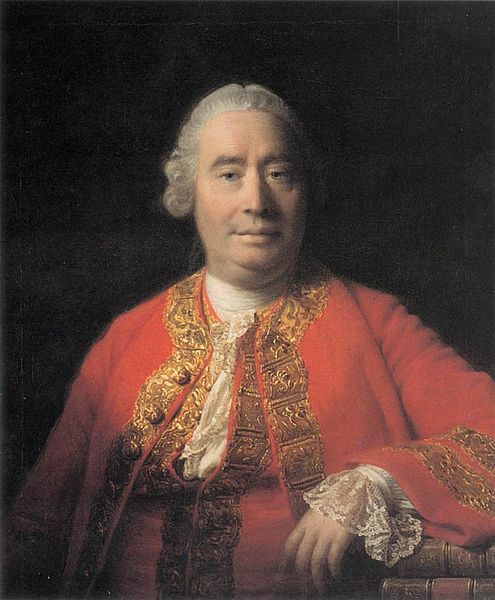
In the reading for Wednesday, Hume compares the data of history ("wars, intrigues, factions, and revolution") with the "collections of experiments" through which "the natural philosopher [i.e., scientist] becomes acquainted with the nature of plants, minerals, and other external objects."
Hume's analogy between the study of history and the study of the natural world depends on several assumptions (which he spells out) about why it's useful to study history.
Identify one or more of those assumptions, then consider it critically. Is Hume's understanding of why history is valuable consistent with why people think history is worth studying now? Is Hume's view of history a product of his time, or is it one of those "constant and universal principles of human nature" that Hume believes characterize people regardless of when or where they live?
Support your claims with some relevant text and be kind and collegial in disagreeing one another.
Deadline: start of class on Wednesday (9/16).
Subscribe to:
Posts (Atom)


 Posts
Posts

